Energy intelligence crosses enterprise IT, operational technology, cloud services, partner systems, mobile users, field devices, and critical facilities. Some data can move freely; other data is sensitive, regulated, contract-limited, high-volume, latency-sensitive, or safety-relevant.
The right architecture is rarely cloud-only or on-premises-only. It assigns each workload and data flow to a boundary based on purpose, sensitivity, latency, availability, control consequence, and recovery requirement.
Six architectural planes
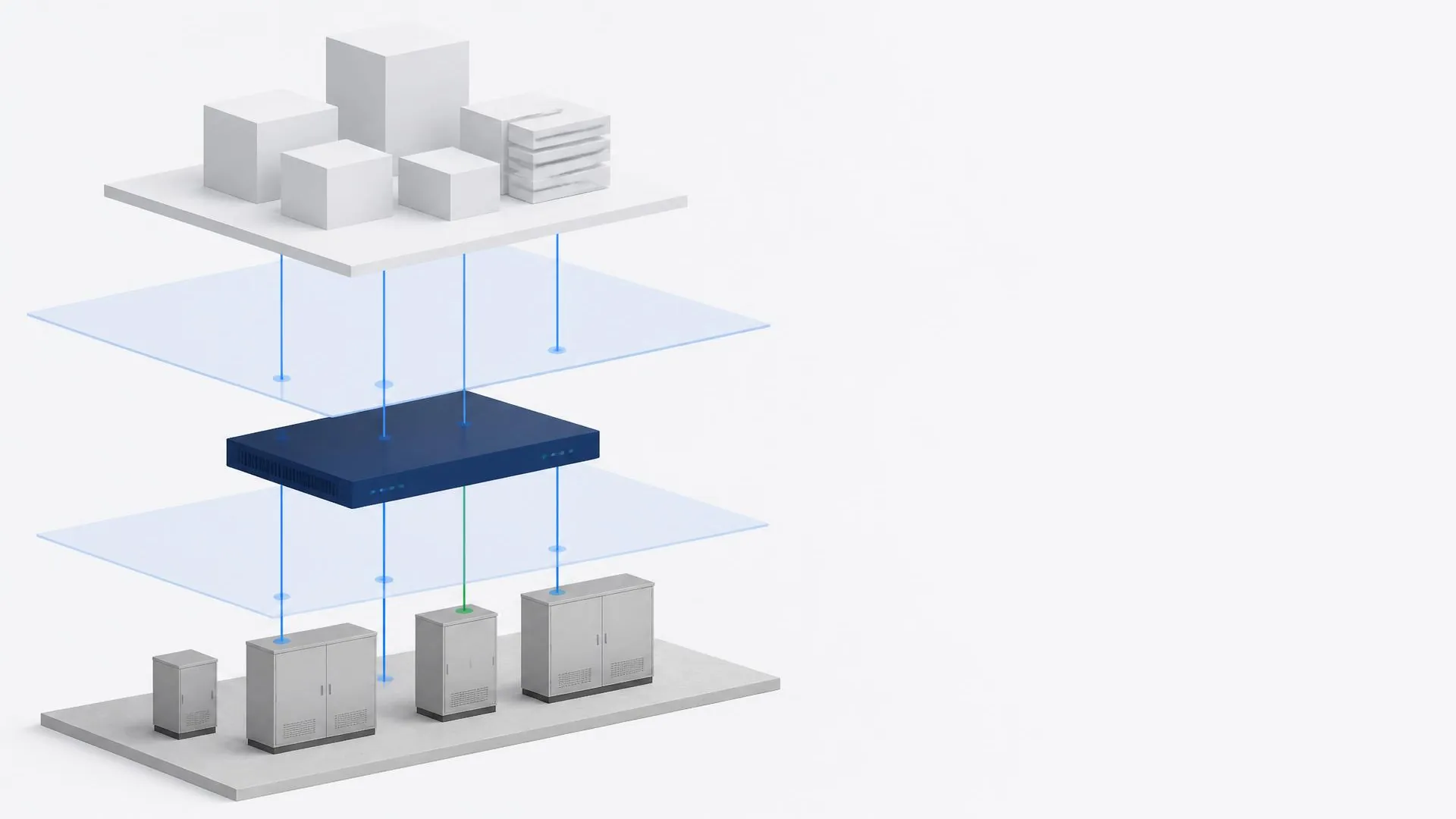
The identity plane authenticates users, services, devices, and partners. The policy plane decides what they may do. The integration plane maps and moves information. The data plane stores transactional, document, master, and time-series records. The intelligence plane models, detects, forecasts, and recommends. The control plane issues and verifies operational instructions.
Separating these planes allows an organization to run analytics in cloud infrastructure while keeping local control at a site, or to retain sensitive records on premises while sharing approved decision outputs.
Cloud, hybrid, and on-premises patterns
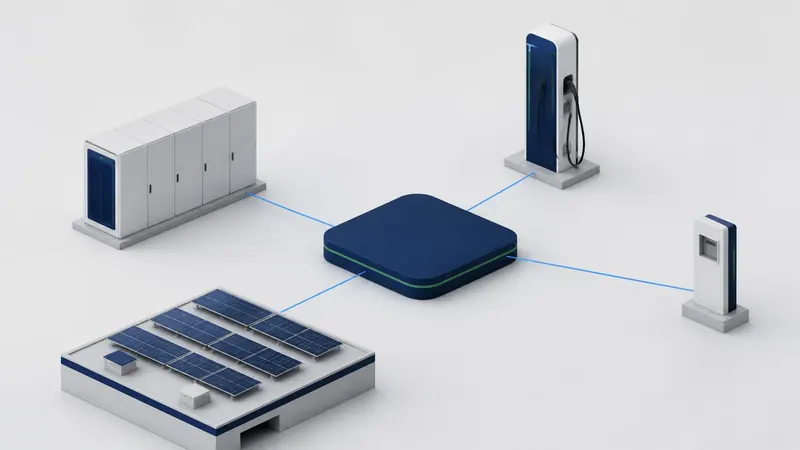
Cloud deployment can accelerate portfolio analytics, collaboration, scaling, updates, and partner access. On-premises deployment can meet local control, sovereignty, isolation, legacy, or reliability requirements. Hybrid deployment distributes functions: site gateways normalize data and enforce local policy; cloud services manage portfolio intelligence; enterprise systems retain authoritative records.
The pattern should be explicit. 'Hybrid' is not a vague promise; it is a documented set of components, trust boundaries, flows, dependencies, and failover behavior.
Zero trust and least privilege
NIST zero trust guidance removes implicit trust based solely on network location. Every access decision should consider identity, resource, device or workload posture, policy, and context. The same principle applies whether a component is on premises or in the cloud.
Human users, APIs, devices, gateways, and partner services require distinct identities. Authorization should be scoped to the minimum data and action, with stronger controls for commands than for reads.
IT/OT segmentation and safe control
Enterprise analytics should not create an uncontrolled path into operational networks. Gateways, brokers, DMZ patterns, allowlisted flows, protocol breaks, monitoring, and local safety systems reduce consequence. Default credentials, shared accounts, flat networks, and undocumented remote access are unacceptable.
Local operations must fail safely when external links are lost. Queued data can synchronize later; protective and critical control should continue according to site design.
Data movement and residency
Classify information by sensitivity, ownership, retention, latency, and permitted destination. Minimize movement: send an aggregate or event when raw high-frequency data is unnecessary. Encrypt in transit and at rest, manage keys, log access, and document third-party processing.
Bi-directional synchronization requires conflict policy, replay, idempotency, schema versioning, reconciliation, and deletion/offboarding behavior. A data boundary is incomplete without an exit path.
Reference implementation sequence
First inventory systems, devices, identities, data classes, and control consequences. Define trust zones and prohibited flows. Establish identity and policy. Deploy read-only integration and observability. Add governed synchronization. Test recovery and offline behavior. Introduce recommendation workflows. Enable limited control only after threat modeling, authorization, simulation, and rollback tests.
Architecture review should ask not only 'Can it connect?' but 'What happens when it is compromised, disconnected, misconfigured, outdated, or removed?'
GRIDSTROM Position
GRIDSTROM's platform architecture connects financial intelligence, enterprise data, asset operations, governed workflows, and lifecycle transactions around persistent records and explicit decision rights. The objective is not to replace every trusted source system. It is to preserve context across systems so an investment decision can remain connected to delivery, operation, optimization, service, and replacement.