
EV Charging Infrastructure
Commercial Charging Begins With the Site, Not the Charger
Charging outcomes are shaped by traffic, electrical capacity, tariffs, operations, and user experience long before hardware is selected. GRIDSTROM engineers the full solution and leads the qualified partners needed to deliver it.
Definition
What this actually means
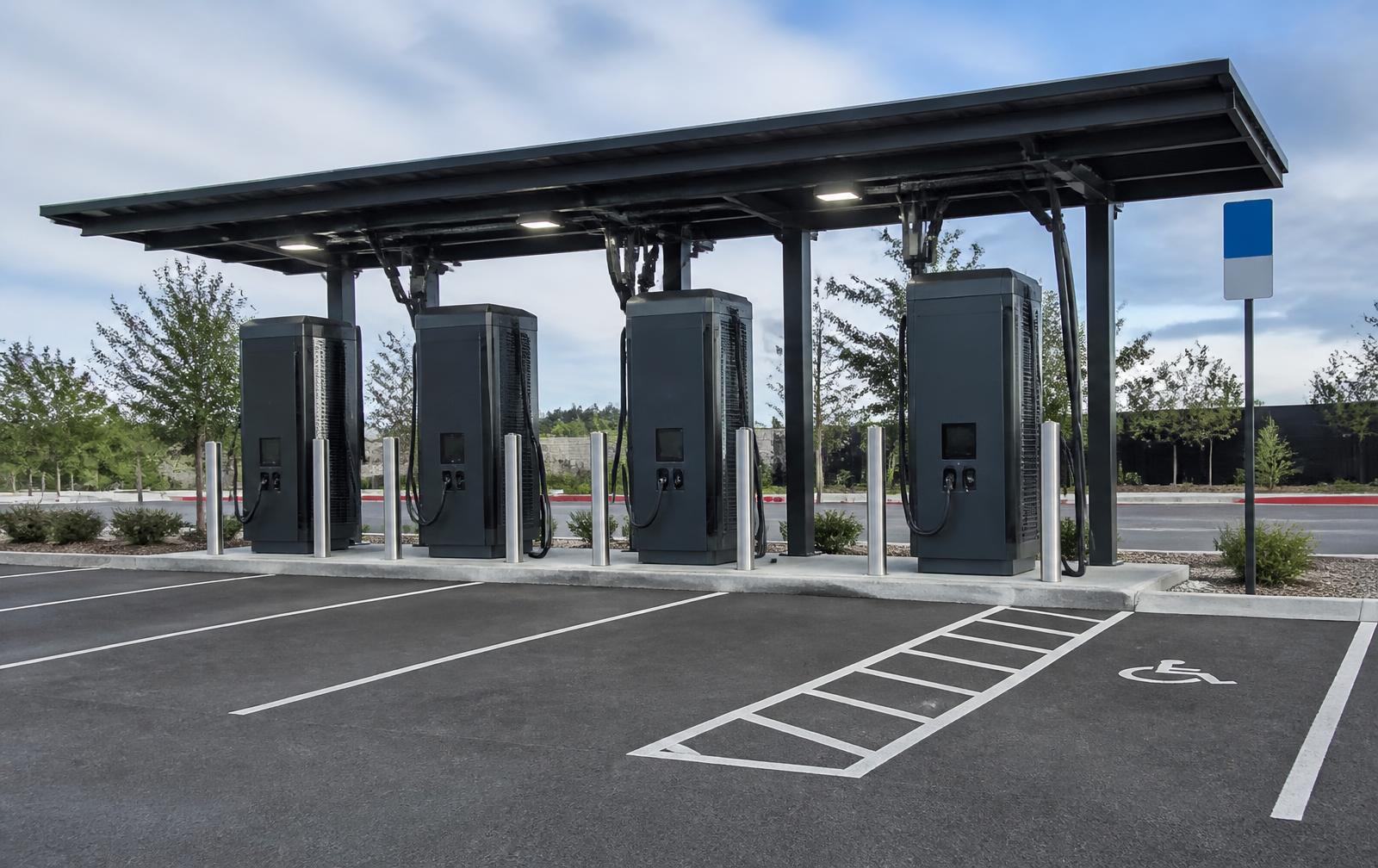
Commercial EV charging infrastructure combines charging equipment, electrical service, network and payment software, site design, and operations to serve a defined driver population. Each deployment can range from a handful of Level 2 stations to multi-port DC fast charging supported by onsite storage, and increasingly includes NACS-compatible hardware and provisioning for future autonomous or robotic charging.
Who It Is For
Organizations most often served
- Retail, mixed-use, and lifestyle center owners
- Hospitality, resort, and destination properties
- Multifamily communities, HOAs, and workplace campuses
- Convenience, travel plaza, and highway-corridor operators
- Public, municipal, and institutional fleets
- Private commercial and last-mile logistics fleets
- Property portfolio owners planning multi-site programs
Problems It May Address
Business and operational context
- Growing driver expectations that a site supports charging
- Utility constraints limiting the size or timing of new load
- Uncertainty about hardware choices, network partners, and pricing
- Poorly performing early deployments installed without a plan for scale
- Fleet operators facing simultaneous demand from multiple vehicles
- Property owners unsure how charging fits their commercial model
Representative System Components
What a typical scope may include
Important Considerations
Site, electrical, utility, safety, permitting, and operations
Traffic and Dwell
How many drivers, how often, and how long they stay drives charger type, count, and layout.
Electrical Capacity
Existing service, panel headroom, and transformer capacity often determine what is feasible in phase one.
Utility Engineering
New service, upgrades, tariffs, and interconnection timelines materially affect schedule and cost.
Site & Parking
Stall geometry, ADA compliance, cable management, snow, and lighting shape usability.
Safety & Permitting
Local code, AHJ requirements, EVSE listing, and fire access must be reviewed for each site.
Software & Payments
Network choice, roaming, pricing rules, and reporting shape operations and driver experience.
Operations & Maintenance
Uptime, call-center response, spare parts, and preventive service determine long-term reliability.
Storage-Supported Charging
Batteries can enable higher-power charging or lower demand charges where utility upgrades are limited.
Phased Expansion
Provisioning conduit, panel space, and site layout for future ports is usually less costly than retrofitting later.
Delivery Structures
Ownership, hosting, service, and financing options
- Owner-owned, owner-operated deployments
- Owner-owned with third-party network and O&M
- Third-party owned and operated (host site model)
- Revenue-share or hosting arrangements with providers
- Fleet-dedicated depots with managed charging
- Blended public/fleet configurations where compatible
- Program- or incentive-supported structures, subject to eligibility
Structures are illustrative and depend on site conditions, tariffs, program eligibility, partner terms, credit, and applicable law. No structure, savings, revenue, or approval is implied or guaranteed.
GRIDSTROM's Direct Role
- • Preliminary opportunity assessment
- • Site qualification and systems architecture
- • Integrated solution design across hardware, software, and site
- • Commercial structuring and model comparison
- • Technology evaluation and provider selection
- • Strategic-partnership development
- • Implementation leadership across engineering, delivery, and operations partners
Provided by Qualified Third Parties
- • Licensed electrical engineering and design
- • Utility service, upgrades, and interconnection
- • Equipment supply, installation, and commissioning
- • Charging network operation and payment processing
- • Ongoing maintenance and field service
- • Permitting, legal, tax, and financing services
Development Process
From initial conversation to engineered implementation
01
Discovery
Understand site, objectives, constraints, and decision-makers.
02
Preliminary Assessment
Screen traffic, electrical, utility, and commercial fit.
03
Concept
Outline charger mix, phasing, and possible commercial structure.
04
Partner Integration
Engage and integrate qualified engineering, equipment, and network partners.
05
Structuring
Refine ownership, financing, and operational responsibilities.
06
Implementation Leadership
Lead schedule, procurement, commissioning, and cross-party execution.
FAQ
Frequently asked questions
- Does GRIDSTROM own the chargers?
- Not by default. GRIDSTROM architects and develops the solution and leads its delivery. Equipment ownership, installation, and network operation are executed by qualified third parties under structures agreed with the property owner or partner.
- Do you operate a charging network?
- No. We do not operate a proprietary charging network or software platform. We evaluate available networks against a site's needs and integrate the selected provider into the delivered system.
- Can you guarantee charging revenue?
- No. Charging revenue depends on utilization, pricing, tariffs, uptime, competing sites, and other factors. Any projections shared during evaluation are illustrative, not guarantees.
- Will chargers work with Tesla vehicles?
- Where NACS-compatible hardware or adapters are appropriate, that compatibility can be part of the specification. The right approach depends on driver mix, hardware availability, and site type.
- Do I need battery storage with charging?
- Not always. Storage is evaluated when it helps manage demand charges, enable higher-power charging under limited utility capacity, or support resilience objectives.
Advisory Services
What Is the Best Energy Opportunity for Your Property?
Request a GRIDSTROM Infrastructure Opportunity Assessment to identify practical options, constraints, economics, funding opportunities, and recommended next steps.
GRIDSTROM Energy Solutions does not manufacture chargers, operate a proprietary charging network, provide licensed engineering, or perform electrical or construction work; those tasks are executed through qualified partners under GRIDSTROM's technical governance. Descriptions of hardware, software, ownership structures, incentives, and performance are general and illustrative. Any actual project is subject to site assessment, engineering, utility engineering, permitting, contracting, and third-party terms.