
Common challenges
- • Utility-capacity constraints
- • Phased AI-compute growth
- • Uptime and critical-load requirements
- • Interconnection delays
- • Backup and onsite-generation strategy
- • Which AI workloads can safely adjust to grid conditions
- • Long-term scalability
Potential opportunities
- • Utility-capacity strategy
- • Onsite generation
- • Battery energy storage
- • Microgrids
- • Intelligent controls
- • Phased infrastructure
- • Renewable integration
- • Resilience architecture
- • Software-defined power readiness
- • Utility-to-compute power-path scenarios
- • Flexible-load and onsite-energy scenario modeling
- • Measurement and verification design for future grid programs
Possible combinations
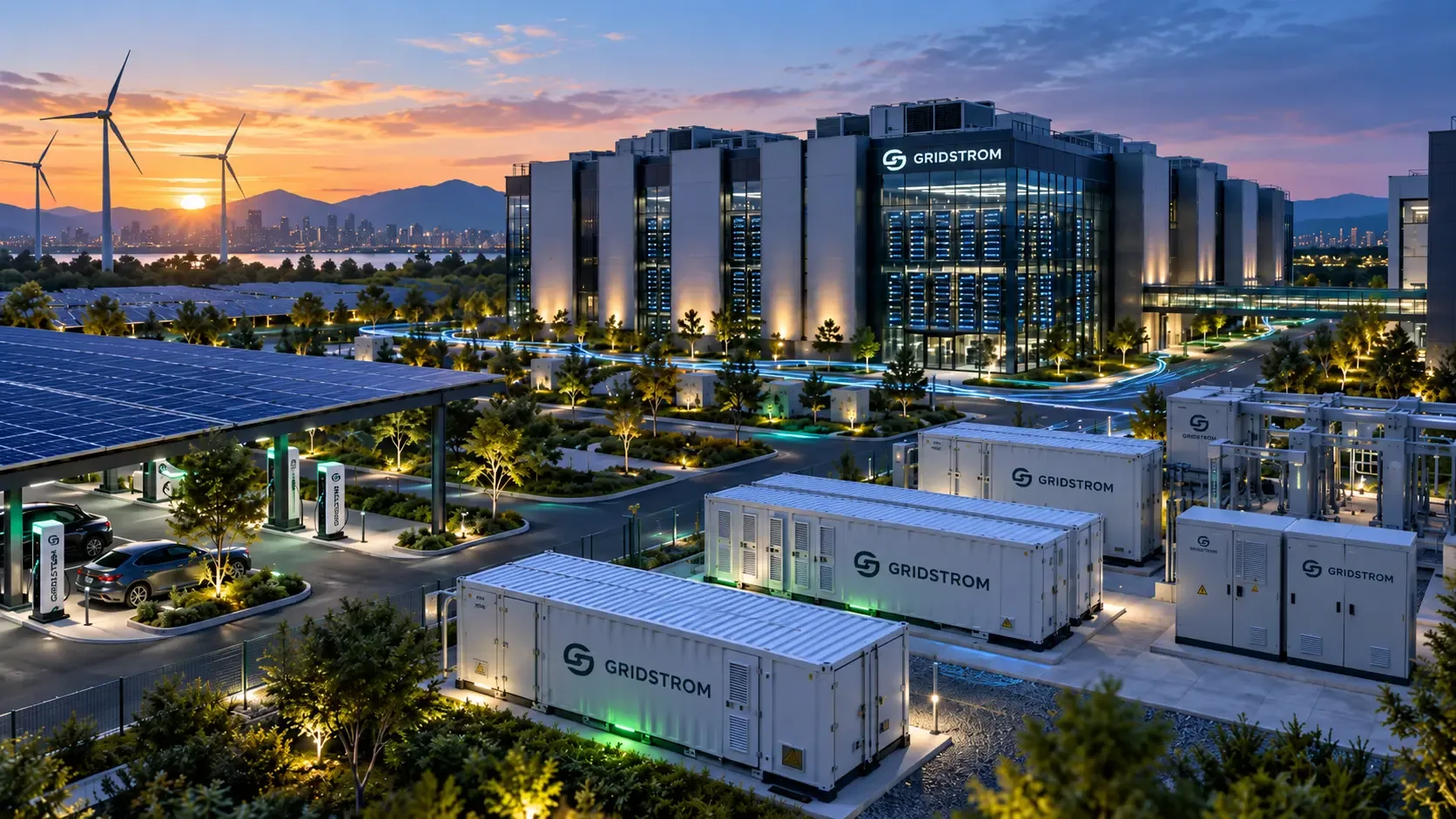
Plan utility service, onsite generation, storage and UPS, distribution, and critical or flexible compute as one power path. Reserve capacity for critical workloads; test the economics and operating constraints of shifting eligible loads before proposing control.
Site considerations
Interconnection path, substation capacity, land, cooling and water strategy, critical-load segmentation, workload flexibility rights, and phased build sequencing.
GRIDSTROM's role
Vendor-neutral systems architecture, power-path and financial scenario analysis, integrated solution development, and implementation leadership across utility service, energy assets, controls and qualified delivery partners. GRIDSTROM connects the investment case to the operating evidence needed for pilot, utility and interconnection review.