
Renewable & Distributed Energy
Integrate Generation, Storage, Loads, and Controls
Distributed energy is most valuable when it is designed around a site's actual loads, tariffs, and long-term plans. GRIDSTROM helps evaluate integrated approaches rather than isolated systems.
Definition
What this actually means
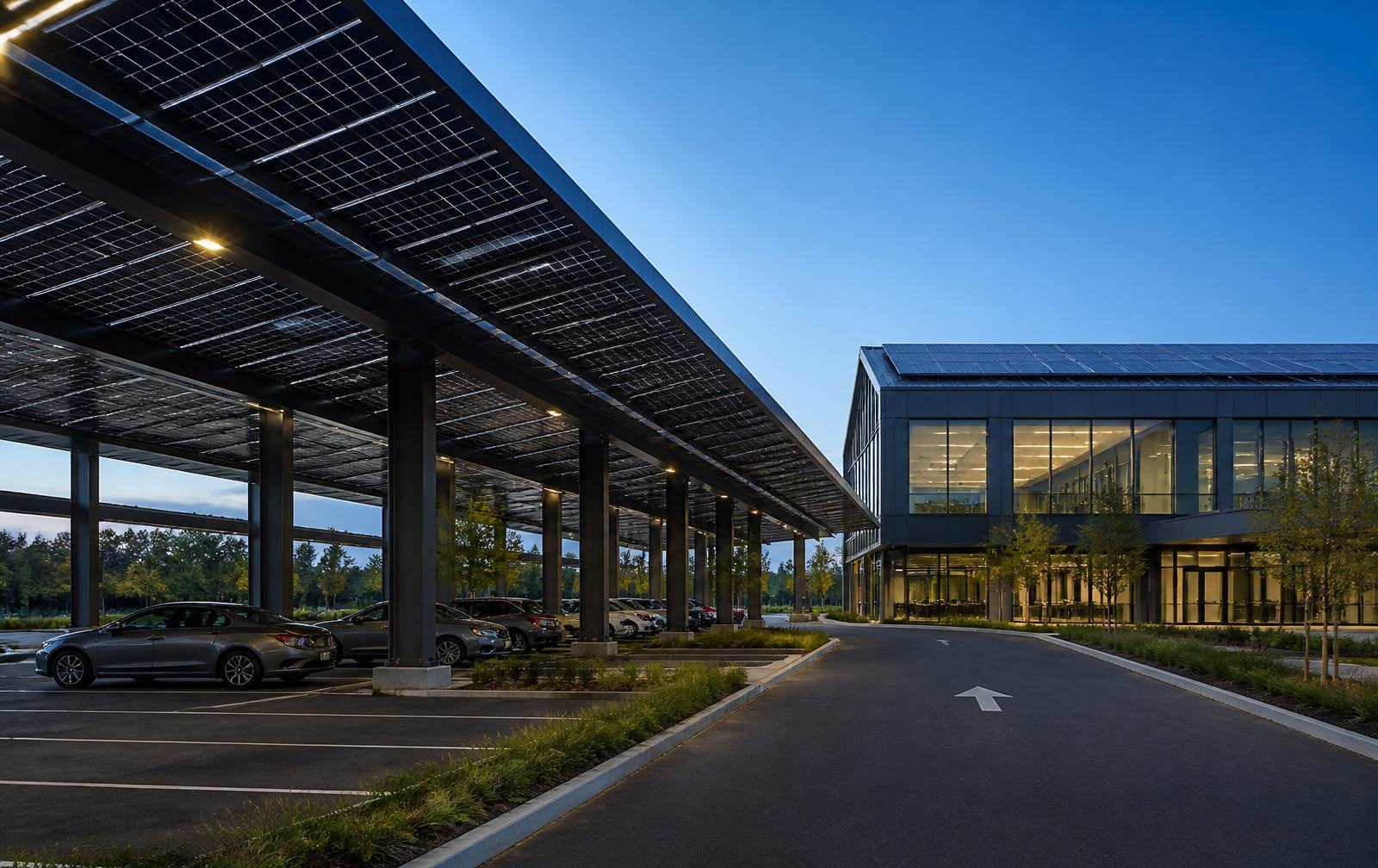
Renewable and distributed energy refers to onsite or near-site resources — including rooftop and ground-mounted solar, solar carports, other distributed generation, battery storage, EV charging, controls, and demand flexibility — evaluated as an integrated system rather than isolated equipment purchases.
Who It Is For
Organizations most often served
- Property and portfolio owners with meaningful roof or land area
- Retail, industrial, warehouse, and mixed-use sites
- Multifamily, hospitality, and campus properties
- Fleets and depots with growing charging demand
- Owners with sustainability, resilience, or cost-management goals
Problems It May Address
Business and operational context
- Rising energy costs or exposure to time-of-use tariffs
- Underused rooftop, parking, or land area
- Solar previously installed without storage or controls
- New loads (charging, HVAC upgrades) that shift the value case
- Interest in participating in applicable utility or state programs
- Sustainability commitments requiring credible implementation
Representative System Components
What a typical scope may include

Important Considerations
Site, electrical, utility, safety, permitting, and operations
Site Suitability
Roof age, structural capacity, shading, orientation, and land use drive what is feasible.
Tariff & Load
Rate structure, interval data, and load profile determine value and preferred configuration.
Interconnection
Utility rules, queue timelines, and study requirements influence schedule and design.
Permitting & Zoning
Local jurisdictions and HOAs may impose material constraints on placement or scale.
Safety & Code
Electrical, fire, structural, and equipment listing requirements are governed by qualified professionals.
Program Eligibility
Federal, state, utility, and local programs change and are subject to eligibility; nothing is assumed.
Storage Pairing
Storage can improve self-consumption, resilience, and program participation, depending on rules and sizing.
EV Integration
Charging can be integrated with generation and storage under a common control strategy; V2G capabilities remain emerging.
Long-Term Plans
Facility upgrades, portfolio changes, and lease structures affect long-term system value.
Delivery Structures
Ownership, hosting, service, and financing options
- Owner-financed and owner-operated systems
- Third-party ownership under a PPA or lease, where available
- Community or aggregation structures, where legally supported
- Solar-plus-storage under unified agreements
- Portfolio-level programs across multiple sites
Structures are illustrative and depend on site conditions, tariffs, program eligibility, partner terms, credit, and applicable law. No structure, savings, revenue, or approval is implied or guaranteed.
GRIDSTROM's Direct Role
- • Preliminary opportunity screening
- • Portfolio prioritization and systems architecture
- • Integrated solution design across generation, storage, and loads
- • Commercial structuring, technology evaluation, and provider selection
- • Technical governance of engineering, EPC, and financing partners
- • Implementation leadership across the delivery team
Provided by Qualified Third Parties
- • Licensed engineering and structural review
- • Equipment supply, installation, and commissioning
- • Interconnection and program applications
- • Financing, PPA, and legal structuring
- • Long-term operations and monitoring
Development Process
From initial conversation to engineered implementation
01
Screen
Assess site suitability, tariff, and load fit.
02
Concept
Outline sizing, storage pairing, and integration options.
03
Structuring
Compare ownership, financing, and program options.
04
Partner Sourcing
Engage qualified engineering and delivery partners.
05
Interconnection & Permitting
Advance utility interconnection and jurisdiction requirements.
06
Implementation Leadership
Lead execution and handoff to operations.
FAQ
Frequently asked questions
- Should I add solar first or storage first?
- It depends on the tariff, load profile, and objectives. Some sites benefit from storage alone; others benefit from solar with storage added later. The order is evaluated case by case.
- What about vehicle-to-grid?
- V2G is an emerging opportunity. Capabilities, vehicle compatibility, warranty terms, and utility rules continue to evolve. It is not a guaranteed feature of any deployment.
- Are there incentives available?
- Federal, state, utility, and local programs exist and change frequently. Eligibility depends on site, ownership structure, and equipment. Nothing is assumed until confirmed by qualified advisors.
- Do you install solar?
- GRIDSTROM architects, develops, and leads the integrated solution. Installation is executed through qualified engineering, EPC, and financing partners under GRIDSTROM's technical governance.
Advisory Services
What Is the Best Energy Opportunity for Your Property?
Request a GRIDSTROM Infrastructure Opportunity Assessment to identify practical options, constraints, economics, funding opportunities, and recommended next steps.
System design, engineering, structural analysis, interconnection, permitting, installation, and financing are performed by qualified third parties. Any references to production, savings, incentives, or program participation are illustrative and subject to detailed analysis, program rules, utility conditions, and applicable law. No outcome is guaranteed.