
Microgrids & Energy Resilience
Architect Local Energy for Critical Operations
A microgrid is a site-specific system that integrates generation, storage, loads, and controls to maintain service for critical operations. Suitability, engineering, and regulatory pathways are evaluated carefully before commitments are made.
Definition
What this actually means
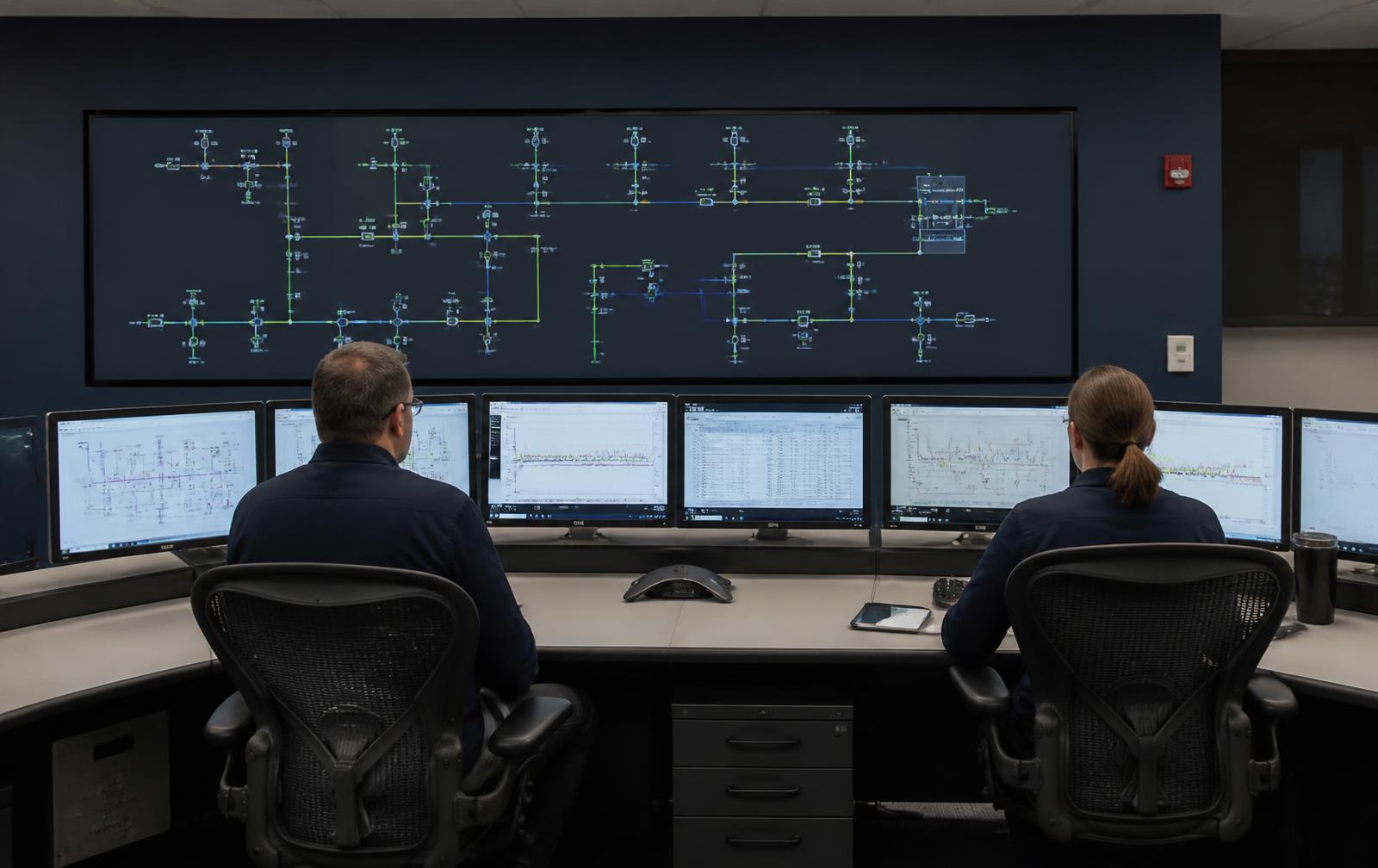
A microgrid is an integrated set of local energy resources — utility connection, onsite generation, solar, storage, generators, protection, and a controller — that serves defined loads and can, where technically and legally appropriate, operate connected to or islanded from the utility grid. Microgrids range from single-building resilience systems to multi-building campus configurations.
Who It Is For
Organizations most often served
- Hospitals and healthcare campuses
- Municipalities and public-safety facilities
- Universities and multi-building campuses
- Resorts, hospitality, and destination properties
- Remote or resilience-critical properties
- Industrial operations with continuity requirements
- Data-intensive and mission-critical infrastructure
Problems It May Address
Business and operational context
- Vulnerability of critical operations to grid disruption
- Revenue or safety losses from unplanned outages
- Aging backup systems that no longer match today's loads
- Difficulty integrating solar, storage, and generators into a single strategy
- Interest in decarbonization without giving up reliability
- Complex utility, code, and permitting requirements slowing progress
Representative System Components
What a typical scope may include

Important Considerations
Site, electrical, utility, safety, permitting, and operations
Critical Loads
The scope begins by defining which loads must be preserved, for how long, and at what quality of power.
Site & Utility
Utility interconnection rules, existing service, and land or roof area shape what is feasible.
Islanding & Protection
Islanding capability is technically and legally sensitive; it requires engineered protection and utility engineering.
Safety & Code
NEC, NFPA, AHJ, and utility requirements govern equipment, siting, and operation.
Permitting & Regulatory
Local jurisdictions, environmental review, and program rules can significantly affect schedule.
Controls Strategy
A microgrid is only as reliable as the controller and operating rules that govern it.
Fuel & Emissions
Any combustion resource must be evaluated for permits, emissions rules, fuel supply, and community expectations.
Operations & Testing
Ongoing testing, exercising, and maintenance are essential to real-world reliability.
Financial Structure
Capital scale is often significant and may require phased implementation or third-party arrangements.
Delivery Structures
Ownership, hosting, service, and financing options
- Owner-financed, owner-operated microgrids
- Energy-as-a-service or resilience-as-a-service arrangements, where offered
- Public-private partnerships for municipal or institutional projects
- Phased implementations that begin with backup and grow toward full microgrid capability
- Portfolio approaches across multiple owner sites
Structures are illustrative and depend on site conditions, tariffs, program eligibility, partner terms, credit, and applicable law. No structure, savings, revenue, or approval is implied or guaranteed.
GRIDSTROM's Direct Role
- • Preliminary suitability assessment
- • Systems architecture and load, objective, and site definition
- • Integrated solution design across generation, storage, and controls
- • Technical governance of qualified engineering, controls, and equipment partners
- • Commercial structuring and technology evaluation
- • Implementation leadership across the delivery team
Provided by Qualified Third Parties
- • Licensed engineering, controls, and protection design
- • Utility interconnection studies and agreements
- • Regulatory, environmental, and permitting review
- • Equipment supply, installation, and commissioning
- • Financing, legal, and tax structuring
- • Long-term operations, maintenance, and testing
Development Process
From initial conversation to engineered implementation
01
Framing
Define critical loads, objectives, and constraints.
02
Feasibility
Preliminary review of site, utility, and technical fit.
03
Concept
Illustrative configuration and phasing options.
04
Engineering Handoff
Engage qualified engineering, controls, and utility partners.
05
Structuring
Refine capital, ownership, and operating structures.
06
Integrated Delivery
Lead execution across engineering, construction, commissioning, and operations.
FAQ
Frequently asked questions
- Is a microgrid the same as a backup generator?
- No. A generator is one possible component. A microgrid integrates multiple resources under a controller and defined operating rules, and may include solar, storage, and grid interaction.
- Can my microgrid island from the utility?
- Sometimes. Islanding capability depends on engineering, protection, utility rules, and safety review by qualified professionals. It is not universally permitted or advisable.
- How much does a microgrid cost?
- Costs vary widely with critical-load size, resource mix, resilience duration, site conditions, and delivery structure. Any figures shared during early conversations are illustrative only.
- How long does a microgrid take to build?
- Timelines depend on engineering scope, utility interconnection, permitting, procurement, and construction. Multi-year timelines are common for larger projects.
- Do you design and build the microgrid?
- GRIDSTROM architects, develops, and leads the integrated solution. Licensed engineering, construction, and operations are executed through qualified third parties under GRIDSTROM's technical governance.
Advisory Services
What Is the Best Energy Opportunity for Your Property?
Request a GRIDSTROM Infrastructure Opportunity Assessment to identify practical options, constraints, economics, funding opportunities, and recommended next steps.
Microgrid design, engineering, protection, permitting, interconnection, construction, and operation are performed by qualified third parties. Any references to islanding, resilience duration, cost, savings, or program eligibility are illustrative and subject to engineering review, utility rules, regulatory approval, and contract terms. No outcome is guaranteed.