
Battery Energy Storage
Store Energy. Manage Demand. Strengthen Resilience.
Battery storage is evaluated against a site's tariffs, load profile, critical loads, and operating patterns — never as a generic product. GRIDSTROM helps determine where storage is warranted and how it should be structured.
Definition
What this actually means
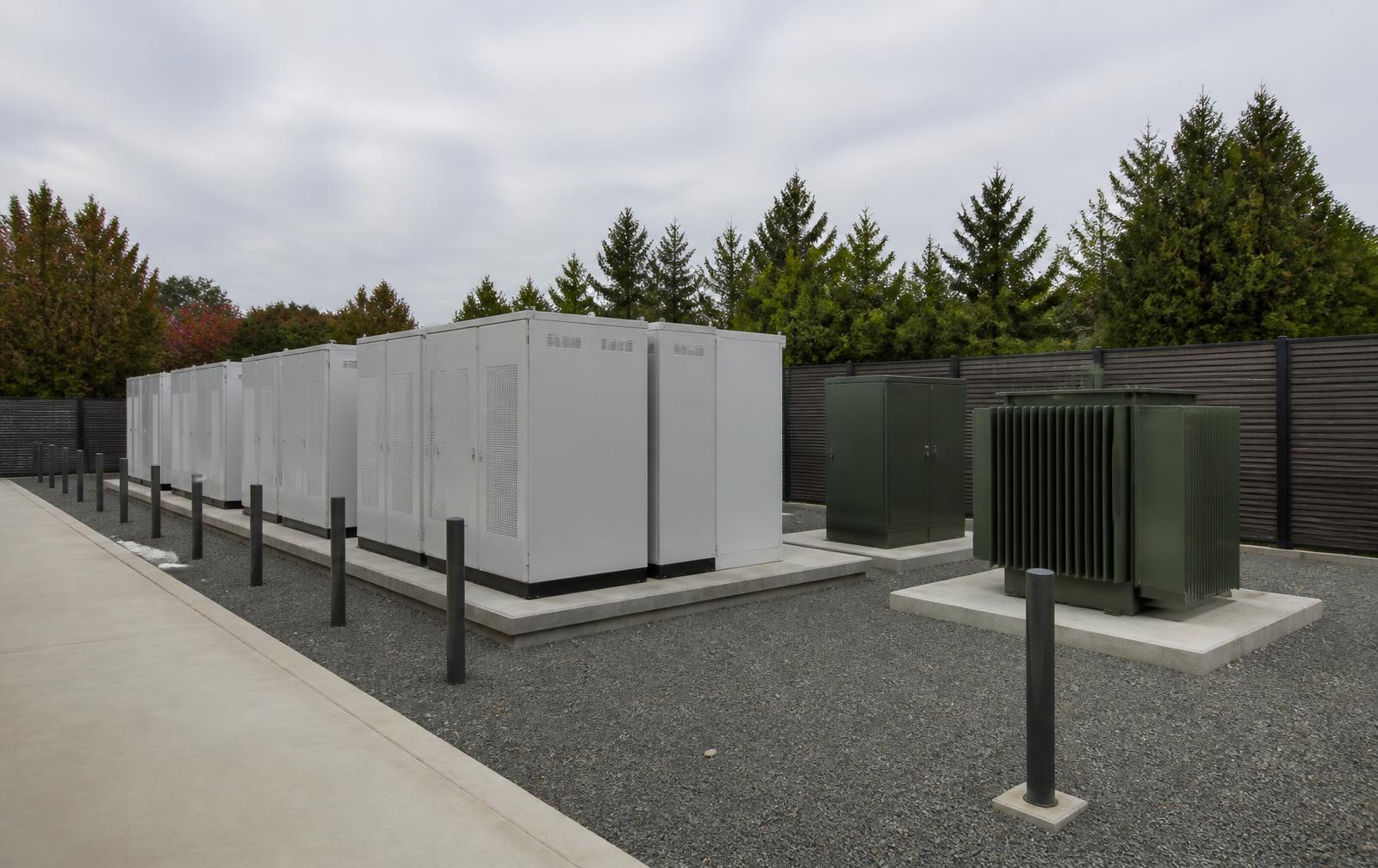
A battery energy storage system (BESS) combines battery modules, power conversion, thermal and fire systems, controls, and interconnection equipment to store and dispatch electricity behind or in front of a customer meter. Applications range from small commercial demand-management units to megawatt-scale installations supporting charging, resilience, or grid programs.
Who It Is For
Organizations most often served
- Commercial and industrial sites with meaningful demand charges
- Properties supporting DC fast charging or high-power loads
- Sites with existing or planned onsite solar
- Healthcare, data, and critical operations
- Municipal and institutional resilience projects
- Multi-site portfolios standardizing energy strategy
Problems It May Address
Business and operational context
- High or volatile demand charges from short usage peaks
- Insufficient utility capacity to support new loads without upgrades
- Interest in resilience for critical operations
- Time-of-use exposure that misaligns generation and consumption
- Difficulty capturing full value from onsite solar
- Need to support fast charging without triggering major service upgrades
Representative System Components
What a typical scope may include
Important Considerations
Site, electrical, utility, safety, permitting, and operations
Load Profile & Tariff
Interval data, demand periods, and tariff structure determine whether storage creates value and how it should be operated.
Duration & Usable Capacity
Power rating, energy capacity, round-trip efficiency, and usable depth of discharge shape sizing and expected performance.
Critical Loads
If backup is an objective, critical circuits must be defined and separated for reliable islanding when technically permitted.
Siting & Setbacks
Available footprint, clearances, ventilation, and emergency access are governed by code and manufacturer requirements.
Fire & Safety Review
NFPA 855, UL 9540 / 9540A, AHJ review, and utility requirements are part of any credible deployment.
Interconnection
Utility interconnection studies, protection settings, and operating agreements can materially affect timing and cost.
Controls & Dispatch
The value case relies on control strategies that align with tariffs, loads, and any market participation.
Degradation & Warranty
Cycling, temperature, and depth-of-discharge affect degradation; warranty terms should be reviewed carefully.
Ownership & O&M
Long-term performance requires monitoring, spares, and maintenance under a defined operations plan.
Delivery Structures
Ownership, hosting, service, and financing options
- Owner-owned and owner-operated systems
- Third-party ownership with an energy-services agreement, where available
- Storage integrated with onsite solar under unified agreements
- Storage supporting a hosted charging deployment
- Program- or incentive-supported structures, subject to eligibility
- Portfolio-scale approaches across multiple sites
Structures are illustrative and depend on site conditions, tariffs, program eligibility, partner terms, credit, and applicable law. No structure, savings, revenue, or approval is implied or guaranteed.
GRIDSTROM's Direct Role
- • Preliminary use-case assessment
- • Site, tariff, and load-profile analysis
- • Systems architecture and integrated solution design
- • Commercial structuring, technology evaluation, and provider selection
- • Technical governance across engineering, equipment, and integration partners
- • Implementation leadership across owner, utility, and vendors
Provided by Qualified Third Parties
- • Licensed engineering and interconnection design
- • Equipment supply, installation, and commissioning
- • Fire, code, and safety review
- • Utility interconnection and program participation
- • Long-term monitoring and maintenance
- • Financing and legal structuring
Development Process
From initial conversation to engineered implementation
01
Objectives
Clarify what the storage system is meant to accomplish and for whom.
02
Data Review
Interval data, tariff, and critical-load analysis.
03
Preliminary Sizing
Illustrative power and energy sizing options.
04
Provider Sourcing
Engage qualified engineering, equipment, and integration partners.
05
Structuring
Refine ownership, financing, and operational terms.
06
Implementation Leadership
Lead execution across engineering, delivery, and commissioning partners.
FAQ
Frequently asked questions
- Will storage save my business money?
- Sometimes. Savings depend on tariff structure, load profile, system sizing, dispatch strategy, and operating discipline. Storage is not universally economic and GRIDSTROM does not promise savings.
- Can storage keep my building running during an outage?
- Certain configurations can support defined critical loads for a limited time. Full backup design requires engineered load separation, controls, and code review by qualified third parties.
- How long do batteries last?
- Useful life depends on chemistry, cycling, temperature, depth of discharge, and warranty terms. Manufacturer specifications, warranty coverage, and long-term O&M plans should be evaluated.
- Can I stack storage with solar?
- Yes, in many cases. Storage can time-shift solar output and help capture more of its value, subject to interconnection rules and program eligibility.
- Do you sell batteries?
- No. GRIDSTROM does not manufacture or resell equipment. We architect the solution, evaluate the technology, and integrate qualified suppliers into the delivered system.
Advisory Services
What Is the Best Energy Opportunity for Your Property?
Request a GRIDSTROM Infrastructure Opportunity Assessment to identify practical options, constraints, economics, funding opportunities, and recommended next steps.
Battery storage design, sizing, safety review, interconnection, permitting, and installation are performed by qualified third parties. Descriptions of savings, revenue, resilience performance, incentives, and warranties are illustrative and subject to detailed engineering, program eligibility, contract terms, utility conditions, and applicable law. No outcome is guaranteed.