Skip to content

Intelligent Energy Infrastructure

From energy decision to operating asset — one intelligent system.

One platform to plan, finance, connect, and manage your energy assets — from first decision to daily operation.

Built for CFOs, operators, and everyone between.

Why it matters

Cut Costs. Strengthen Operations.

Energy spending is decided in finance and lived with in operations. GRIDSTROM keeps those two views on the same record, so the assumptions behind an investment stay connected to how the asset actually performs.

Decide with financial clarity

Investment models, scenarios and lifecycle economics sit beside the asset they describe — so budgets and approvals rest on the same record operations will use.

Operate with asset intelligence

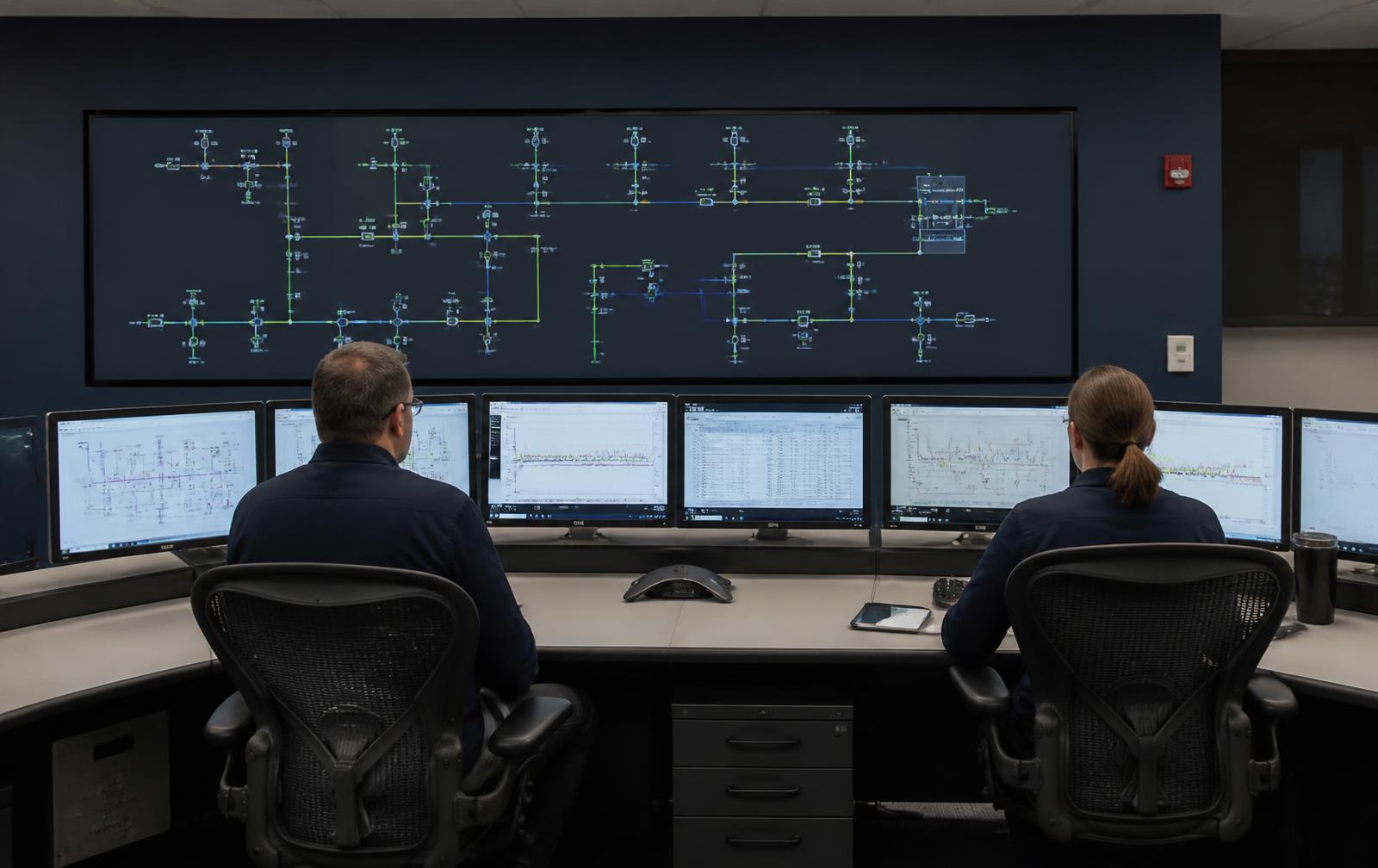
Condition, performance and exceptions across sites give teams persistent visibility instead of separate vendor portals.

Act without losing context

Optimization, service coordination and procurement of what comes next run against one shared history of the asset.

The GRIDSTROM platform

One Platform. Every Energy Asset. Unified Intelligence.

Nine connected stages. Each one passes its information to the next, so the investment decision you make today keeps informing operation, service and replacement for the life of the asset.

Model the investment before capital is committed.

Sites, loads, constraints, budgets and objectives sit in one planning model, so scenarios are compared on the same financial and technical basis.

  • Site and portfolio modeling
  • Scenario and capital comparison
  • Phasing and sequencing

Capability architecture

  • Financial Modeling

    CapEx, ROI, IRR, NPV, budgeting and lifecycle economics.

  • Vendor-Neutral Asset Intelligence

    One asset record across supported manufacturers and technologies.

  • Optimization

    Tariff, dispatch and configuration strategy across the portfolio.

  • Service Coordination

    Recommended actions, approvals and completed work in one place.

  • Marketplace

    Requirements, options, quotes and replacement sourcing.

Vendor-neutral describes the architecture and interoperability strategy. Supported manufacturers, protocols and control capabilities depend on the integrations established for each deployment.

Lifecycle intelligence

One intelligence layer for the energy asset lifecycle

Nine connected stages, one asset record. Select a stage to see the question it answers, the capability behind it, and where its information goes next.

  1. Is this investment worth making, and on what basis?

    Scenario modeling, site and portfolio planning, and objective comparison.

    Representative output: Modeled scenario with scope, constraints and phasing assumptions on record.

    Next connected stage: Finance

    PlanFinanceApproveProcureDeployOperateOptimizeServiceReplace

The reasoning loop

Data → Detect → Diagnose → Value → Act → Verify → Learn

  1. 01

    Data

    Signals and records arrive from connected systems.

  2. 02

    Detect

    Deviations and exceptions are surfaced.

  3. 03

    Diagnose

    Probable cause is narrowed with asset context.

  4. 04

    Value

    Economic effect of acting or waiting is estimated.

  5. 05

    Act

    An approved action or work request is issued.

  6. 06

    Verify

    Result is checked against the expected outcome.

  7. 07

    Learn

    Findings update assumptions for the next decision.

This describes the intended platform workflow and how information is meant to move between stages. It does not indicate that every step is automated or production-deployed; available capability depends on the integrations and configuration established for each deployment.

Product experience

See GRIDSTROM in action

Six short sequences across planning, operations, optimization, onboarding, field service and sourcing — using demonstration data.

Representative workflows shown; capabilities are released progressively.

The GRIDSTROM Advantage

Break down silos. Unlock business value.

GRIDSTROM connects the information and teams behind critical energy and infrastructure decisions—helping organizations move faster, spend smarter, operate better, and capture more value.

Complex architecture. Simple to use.

GRIDSTROM connects fragmented financial, operational and infrastructure systems, transforms their data into coordinated intelligence, and delivers clear decisions, optimized actions and measurable value.

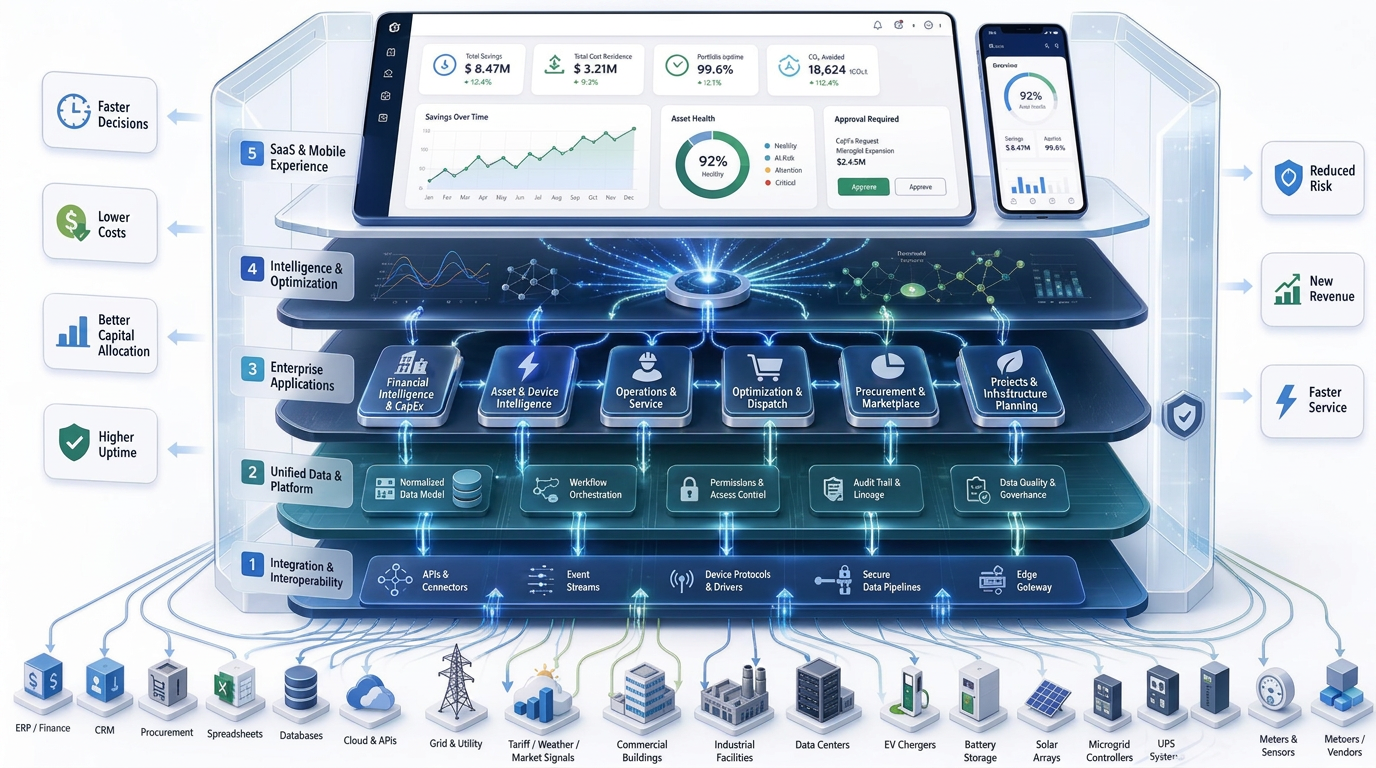
Layered GRIDSTROM architecture diagram. External business systems, cloud data, grid and market signals, facilities, energy assets and partners connect at the bottom into Layer 1 Integration and Interoperability. Above it, Layer 2 Unified Data and Platform provides the governed foundation, Layer 3 Enterprise Applications runs six connected modules, Layer 4 Intelligence and Optimization serves all applications with forecasts, risks and recommendations, and Layer 5 SaaS and Mobile Experience presents a simple dashboard with approve and send back controls. Security, governance, permissions, auditability, reliability and explainability span every layer, and the architecture produces eight business outcomes including faster decisions, lower costs, better capital allocation, higher uptime, reduced risk, new revenue opportunities, faster service and greater customer value.

Complexity enters below

Business Systems · Data & Cloud · Grid & Market · Facilities · Energy Assets · People & Network

Two-way flow
Layer 1 · Complexity enters hereIntegration & Interoperability

Enterprise systems, field devices and market signals connect through governed, two-way interfaces — information moves into GRIDSTROM and approved actions move back out.

  • APIs & Connectors
  • Event Streams
  • Device Protocols & Drivers
  • Secure Data Pipelines
  • Edge Gateway
  • Bidirectional Sync

1 of 5

Value rises

Value emerges above

  • Faster Decisions
  • Lower Costs
  • Better Capital Allocation
  • Higher Uptime
  • Reduced Risk
  • New Revenue Opportunities
  • Faster Service
  • Greater Customer Value
Layered GRIDSTROM architecture diagram. External business systems, cloud data, grid and market signals, facilities, energy assets and partners connect at the bottom into Layer 1 Integration and Interoperability. Above it, Layer 2 Unified Data and Platform provides the governed foundation, Layer 3 Enterprise Applications runs six connected modules, Layer 4 Intelligence and Optimization serves all applications with forecasts, risks and recommendations, and Layer 5 SaaS and Mobile Experience presents a simple dashboard with approve and send back controls. Security, governance, permissions, auditability, reliability and explainability span every layer, and the architecture produces eight business outcomes including faster decisions, lower costs, better capital allocation, higher uptime, reduced risk, new revenue opportunities, faster service and greater customer value.

Value exploration

Your GRIDSTROM Value

Adjust a few optional inputs to see which value categories tend to matter most for a portfolio like yours. Nothing is sent anywhere, and no contact information is required.

Optional example inputs

Every field is optional and every field offers “Unknown / Prefer to discuss.”

Approximate count across the portfolio you manage.

Range only. Used to scale the illustration, not to price anything.

How often assets or sites are unavailable in a normal year.

Range only. Helps illustrate where prioritization effort concentrates.

How many separate systems or files hold the asset record today.

Inputs stay in your browser for this session only. They are not transmitted or stored unless you choose to send them through the secure intake form.

Planning estimate based on the assumptions shown; actual results vary.

  • Decision-cycle efficiency

    Not enough input yet

    How much rework a decision requires when the inputs live in separate systems.

    Demonstration formula: Emphasis = average of (data fragmentation, portfolio size) on a 1–4 demonstration scale. Currently unscored — the inputs it uses are set to “Unknown / Prefer to discuss.”

  • Avoided downtime exposure

    Not enough input yet

    Exposure created by unplanned unavailability across the portfolio.

    Demonstration formula: Emphasis = average of (downtime exposure, portfolio size) on a 1–4 demonstration scale. Currently unscored — the inputs it uses are set to “Unknown / Prefer to discuss.”

  • Energy / tariff opportunity

    Not enough input yet

    Room to review tariffs, load shape and dispatch-aware decisions.

    Demonstration formula: Emphasis = average of (annual spend range, portfolio size) on a 1–4 demonstration scale. Currently unscored — the inputs it uses are set to “Unknown / Prefer to discuss.”

  • CapEx prioritization

    Not enough input yet

    Ranking projects on one basis instead of per-spreadsheet assumptions.

    Demonstration formula: Emphasis = average of (planned CapEx range, data fragmentation) on a 1–4 demonstration scale. Currently unscored — the inputs it uses are set to “Unknown / Prefer to discuss.”

0 of 5 optional inputs set. Categories with no input remain unscored rather than assuming a default.

Discuss a Verified Assessment

Sending anything is your choice — the secure intake form is the only place details are transmitted.

Finance meets operations

Spend Smarter. Run Stronger.

Most organizations model an energy investment in one system and operate the resulting asset in another. GRIDSTROM connects them, so the assumptions behind a decision can be compared against how the asset actually performs.

Financial intelligence

  • CapEx and budget planning
  • ROI, IRR and NPV views
  • Scenario modeling and alternatives
  • Forecasting and depreciation
  • Lifecycle economics
  • Approvals and governance

Operational intelligence

  • Asset health and condition
  • Monitoring and exceptions
  • Performance and utilization
  • Optimization actions
  • Maintenance and service
  • Replacement decisions

Modeled results are planning outputs based on your inputs, site conditions, tariffs, utilization and technology selection. GRIDSTROM does not guarantee financial or operational outcomes.

Financial intelligence · Preliminary planning tool

Model the Investment. Master the Power.

CapEx planning, scenario comparison and lifecycle economics start with an order-of-magnitude view. Pick a category and a rough size to see an early budgeting range. Illustrative only — not a quote, guaranteed savings, or commitment. Real numbers depend on your site, utility service, tariffs, and incentives.

Capital governance: approvals, evidence and traceability

Per-port hardware + typical soft costs. Excludes major service upgrades.

Directional Range

$17k $61k

Order-of-magnitude installed cost band for 8 ports in the selected category.

Directional planning estimate based on selected assumptions. Utility upgrades, civil work, permitting, networking, site conditions, equipment selection, and regional labor can materially change actual cost.

Excludes major utility service extensions, land, financing costs, tax / incentive treatment, ongoing operations, and site-specific engineering. Use only as a planning starting point.

Product principles

Complex infrastructure. Simple to manage.

GRIDSTROM connects financial, operational, project, and asset information from the systems you already use—turning fragmented information into connected intelligence and insights. Spend less time searching for, reconciling, and trying to manually integrate information, and more time evaluating opportunities and making informed decisions.

  1. Data
  2. Connected information
  3. Intelligence
  4. Insights
  5. Decisions
  6. Action

The GRIDSTROM advantage

Data silos don’t just cost money. They cost decisions.

Every acquisition, every new system, every department that adopts its own tool creates another silo. Closing those gaps the traditional way means months of work from $500K+ integration consultants and an already-stretched IT team — and it has to happen again after every merger, every new platform, every reorg. In the meantime, executives are making high-stakes decisions on partial or outdated information. GRIDSTROM closes that gap automatically — connecting the systems you already use so the right data reaches the right decision-maker before the window closes.

See what is happening. Understand why it matters. Decide what deserves attention next.

Disconnected inputs

  • ERP
  • CRM
  • Spreadsheets
  • Utility data
  • Project systems
  • Asset records
  • Documents
  • Departments & acquired systems

GRIDSTROM Integration Layer

  • Connect
  • Organize
  • Model
  • Govern
  • Synchronize

Business outputs

  • Financial modeling
  • CapEx governance
  • Decision-ready insights
  • Procurement & marketplace
  • Operating asset intelligence
  • Service & replacement
Reference architecture. Available sources and outputs are configured to the systems in place and the scope of each deployment.

Direct comparison

Data environment

Disconnected environment

Information isolated across systems, files, departments, and teams.

With GRIDSTROM

Connected financial, operational, project, and asset information.

Workflow

Disconnected environment

Repeated manual entry, spreadsheet reconciliation, and disconnected handoffs.

With GRIDSTROM

Information carries forward across connected workflows.

Time to insight

Disconnected environment

Significant time spent finding, reconciling, and preparing data.

With GRIDSTROM

Faster access to usable information for analysis and decisions.

Integration burden

Disconnected environment

Repeated one-off integration work and $500K+ consulting engagements compete with IT priorities.

With GRIDSTROM

Reusable connectors and governed data flows reduce repetitive manual effort.

Decision quality

Disconnected environment

Limited visibility can delay or weaken decisions.

With GRIDSTROM

Better context, stronger visibility, and more informed decisions.

Team impact

Disconnected environment

Frustrated teams and slower project movement.

With GRIDSTROM

Better coordination and more time focused on high-value work.

Lower manual effort

Reduce duplicate work, spreadsheet reconciliation, and repetitive reporting effort.

Faster access to information

Help teams get to usable information sooner.

Better-informed decisions

Bring relevant financial, operational, project, and asset context together.

More time for high-value work

Let teams spend less time assembling data and more time acting on it.

GRIDSTROM · Portfolio Intelligence
Plan
Finance
Approve
Procure
Deploy
Operate
Optimize
Service
Replace

Scenario A

Scenario B

Scenario C

Lifecycle timeline

Asset health

Financial outcome

Representative GRIDSTROM workflow shown with demonstration data.
  1. 01Create one trusted, connected view.

    Bring financial, project, operational, and asset information together across sites and portfolios. Spend less time hunting through departments, reconciling spreadsheets, or waiting for one-off reports before making a decision.

  2. 02Model the investment before committing capital.

    Run financial analysis, compare scenarios, model lifecycle economics, and support configurable CapEx review and approval. Keep assumptions, constraints, projected returns, risks, and supporting evidence visible and traceable.

  3. 03Turn intelligence into decision-ready insights.

    Surface the trends, risks, opportunities, scenario comparisons, financial implications, and supporting evidence that matter—so executives can understand what is happening, why it matters, and what deserves attention.

  4. 04Move from decision to execution.

    Carry approved requirements into sourcing, quotes, products, services, approvals, procurement, and deployment. Preserve the context behind the investment instead of restarting the process in another disconnected workflow.

  5. 05Keep your business systems synchronized.

    Support governed, bi-directional data exchange with the systems your organization already relies on. Carry appropriate information forward and synchronize updates back so teams do not repeatedly rebuild the same information across the asset lifecycle.

Executive insight example

From data to decision

Answer first. Evidence underneath. Action next.

  1. What changed

    A relevant financial or operational condition changes.

  2. Why it matters

    GRIDSTROM relates the change to affected assets, projects, economics, or operational conditions.

  3. Business impact

    The system surfaces the potential financial or operational consequence.

  4. Options

    Relevant scenarios or alternatives can be compared.

  5. Evidence

    Users can inspect source information, assumptions, calculations, and supporting context.

  6. Action

    Move into modeling, approval, procurement, operations, service, or another appropriate workflow.

Connect what you already have.

GRIDSTROM is not designed to force enterprises to replace every system they already trust. It works across financial, operational, project, and asset information so those systems support each other throughout the energy infrastructure lifecycle.

See how GRIDSTROM eliminates data silos →

Your data shouldn’t require a new integration project every time you need an answer.

Reusable connections and automated workflows can reduce the repetitive integration, reconciliation, and reporting work that otherwise consumes internal IT capacity and outside consulting resources.

Open Energy Ecosystem

Designed to work with the systems you already run

GRIDSTROM is a vendor-agnostic intelligence and workflow layer, connecting financial planning, enterprise data, distributed energy assets, field service, procurement, and partner ecosystems without asking you to replace them.

  • Finance / ERP / Accounting
  • CRM
  • Procurement
  • Identity / HR
  • Data Warehouse / Lake
  • Files / Spreadsheets
  • IoT / Device Protocols
  • Service / Ticketing
  • Utility / Market Signals
  • Reporting / Export

Built for the whole decision

Built Around the Decisions You Make

One platform, one set of records — presented around the question each leader is actually trying to answer.

CFO / Finance & Investment

Spend Smarter. Maximize Asset Returns.

Model the investment before it is committed and keep the economics visible after it is built.

  • Financial modeling and CapEx
  • Scenario comparison and forecasting
  • Approvals, governance and financial risk
Model your opportunity

COO / Operations

Strengthen Operations. Reduce Downtime.

Bring asset condition, exceptions and service coordination into one operating view.

  • Operational visibility and exceptions
  • Maintenance and service coordination
  • Resilience and operational risk
See resilience solutions

Energy & Facilities

One Platform. Connected Energy Assets.

Multi-site visibility across the energy systems you already own and the ones you are adding.

  • Multi-site asset intelligence
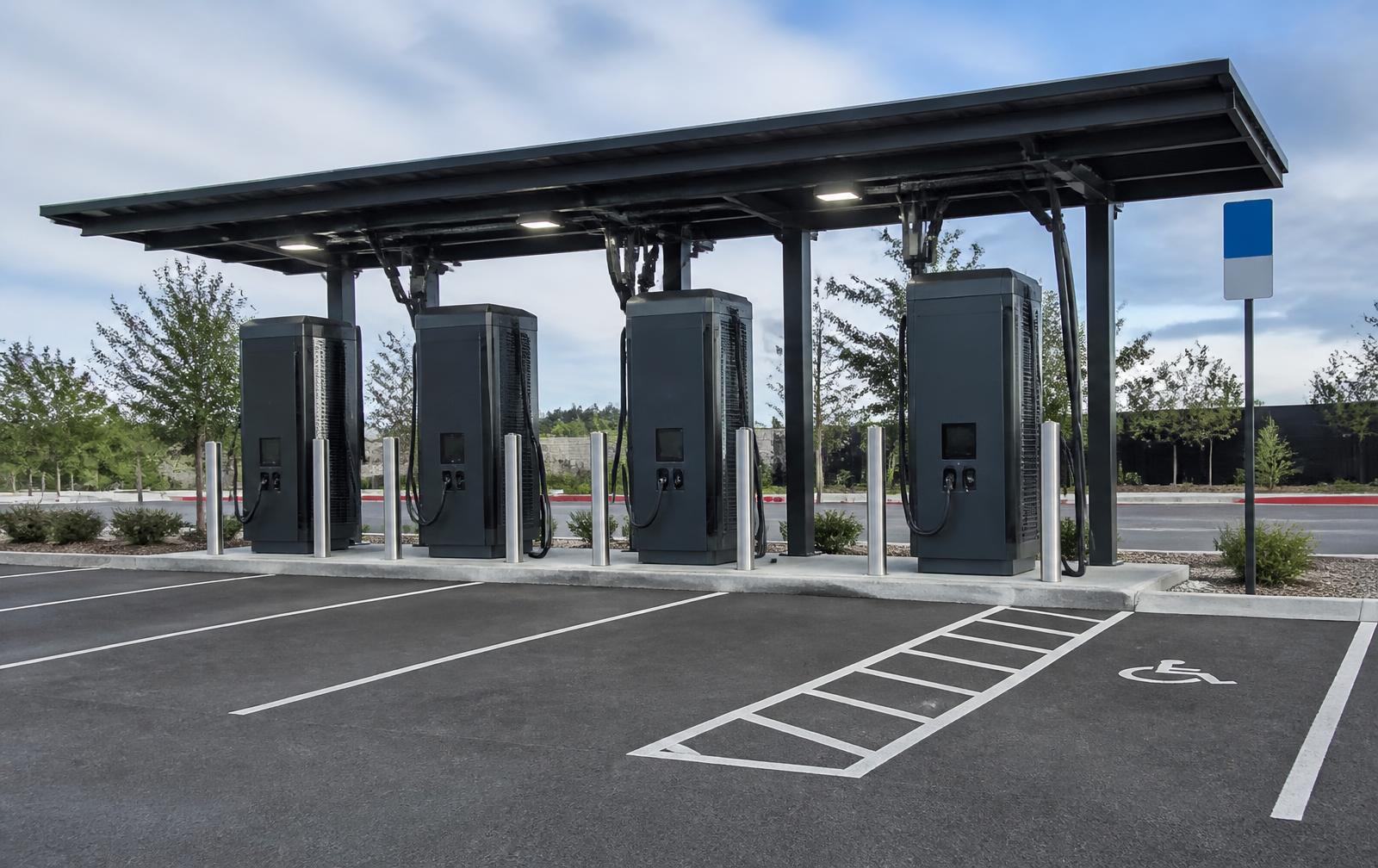
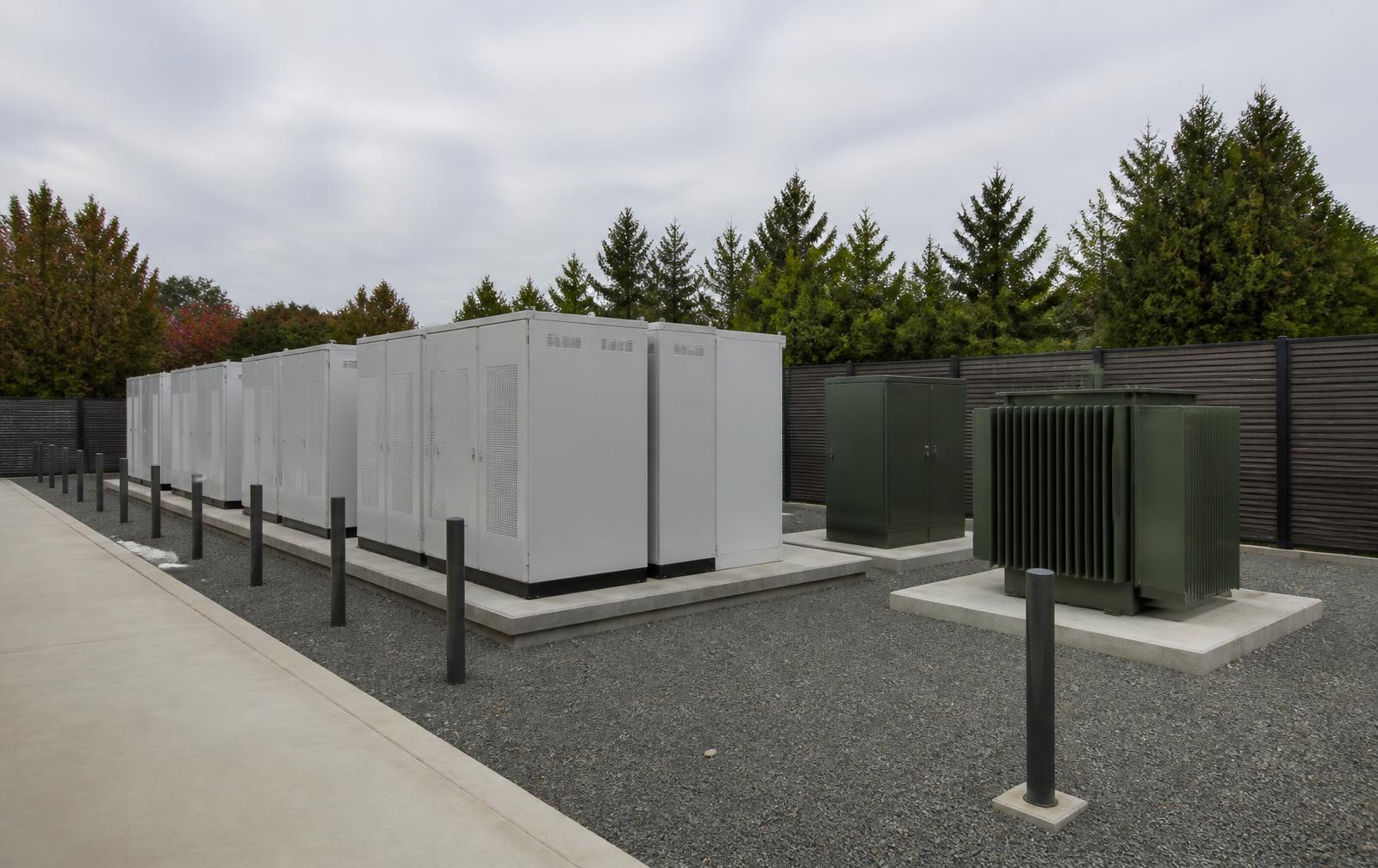
  • EV charging, storage, microgrids, solar
  • Vendor-neutral infrastructure records
Explore solutions

Fleet

Maximize Fleet Uptime. Minimize Capital Waste.

Plan depot capacity around duty cycles, then track availability and utilization as vehicles scale.

  • Charging infrastructure and capacity
  • Availability and utilization
  • Lifecycle economics per depot
Fleet electrification

Procurement

Source Smarter. Manage the Lifecycle.

Requirements, options, quotes and approvals stay attached to the asset they belong to.

  • Requirements and alternatives
  • Quotes, vendors and approvals
  • Replacement and lifecycle traceability
Partner and vendor network

Executive Leadership

See Performance. Understand Value.

Portfolio-level financial and operational performance in one decision-support view.

  • Portfolio and capital requirements
  • Asset health and exceptions
  • Risk and decision support
GRIDSTROM Intelligence

From insight to action

A Dashboard Shows You a Problem. A Platform Closes It.

Every finding is designed to travel the same path — from detection to an approved action and a permanent lifecycle record.

  1. 01

    Condition or need identified

    Monitoring, inspection or a planning review surfaces the issue.

  2. 02

    Financial and operational impact evaluated

    Cost, risk, performance and lifecycle position are assessed together.

  3. 03

    Recommended action

    A specific action is proposed with its rationale attached.

  4. 04

    Optimization, service or replacement options

    Alternatives are compared, including cost and expected effect.

  5. 05

    Authorized review and approval

    The right role reviews and approves before work proceeds.

  6. 06

    Lifecycle record updated

    The asset record, economics and history reflect what was done.

  • Vendor-neutral by design

    No equipment or brand allegiance — the design serves your site, not a vendor.

  • Engineered for resilience

    Utility service, generation, storage and controls planned together as one system.

  • Delivered through qualified partners

    Engineering, construction, capital and utility partners coordinated under one plan.

What Could Your Property Support?

What Could Your Site Support?

Choose a property or opportunity type to see the primary and supporting capabilities GRIDSTROM typically evaluates. Directional only — every actual project depends on site-specific technical and commercial review.

Directional Profile

Data Center / AI Campus

Power-intensive compute with strict uptime and phased growth needs.

Primary capabilities

  • Utility capacity strategy
  • Onsite generation
  • Battery energy storage
  • Microgrid architecture

Supporting considerations

  • Critical-load segmentation
  • Backup power
  • Intelligent controls
  • Phased capacity expansion

Frequently multi-phase, capital-intensive, and utility-constrained. Early architecture decisions materially affect long-term flexibility.

Priority Markets

Where Intelligent Energy Infrastructure Creates the Greatest Impact

Explore all markets →
01 · Priority

Data Centers & AI Infrastructure

Power availability, resilience, phased capacity, onsite generation, storage, microgrids, and critical-load strategy for AI and high-density compute.

  • Utility capacity
  • Onsite generation
  • Storage
  • Critical loads
02 · Priority

Fleet & Transportation Electrification

Depot charging, utility upgrades, managed loads, storage integration, resilience, and phased vehicle deployment across duty cycles.

  • Depot design
  • Managed charging
  • Utility engineering
03 · Priority

Commercial Properties & Portfolios

Charging, storage, solar, tenant value, and site-hosting opportunities across single properties and multi-site portfolios.

  • Portfolio screening
  • Tenant value
  • Site hosting
04 · Priority

Municipal, Institutional & Resilience

Integrated microgrids, backup, and critical-load architecture for hospitals, universities, public safety, and community-critical facilities.

  • Microgrids
  • Backup power
  • Critical operations
Anders, GRIDSTROM's AI Energy & Finance Analyst

GRIDSTROM ENERGY INTELLIGENCE

Meet Anders

GRIDSTROM's AI Energy & Finance Analyst

Meet GRIDSTROM's digital presenter for intelligence at the intersection of energy, finance, AI and infrastructure.

Visit the Intelligence Portal

Project Opportunity Examples

Ways Integrated Projects Can Be Structured

Examples of the opportunities GRIDSTROM evaluates and structures. Any actual project is scoped through site-specific technical, commercial, and contractual review.

Representative Application

Data-center campus with staged utility capacity

Engineered utility upgrade strategy, onsite generation, and storage sized to support phased AI-compute growth.

Representative Application

Retail portfolio with storage-supported charging

Screening a national retail portfolio to prioritize sites where charging plus storage can manage demand charges.

Representative Application

Fleet depot with phased high-power charging

Sequencing depot electrification across multiple years around vehicle deployment and utility service milestones.

Representative Application

Hospital microgrid architecture assessment

Reviewing critical-load segmentation, generation, storage, and controls to strengthen continuity of clinical operations.

Representative Application

Resort solar-plus-storage and charging

Evaluating a resort's amenity, sustainability, and resilience goals as a single integrated infrastructure plan.

Representative Application

Mixed-use development energy master plan

Framing an integrated energy strategy alongside the site's civil, electrical, and commercial planning.

Our Approach

How GRIDSTROM Delivers Intelligent Infrastructure

GRIDSTROM integrates energy strategy, systems architecture, and trusted delivery partners to help clients develop resilient, future-ready infrastructure.

We bring technical, commercial, operational, and implementation considerations together so clients can make better infrastructure decisions and move projects forward with greater clarity.

Integrated Strategy

Utility capacity, onsite generation, storage, controls, charging, backup power, and building loads are evaluated as one system built for growth.

Vendor-Neutral Evaluation

Technology, equipment, and delivery partners are selected on site fit, interoperability, commercial value, and long-term flexibility.

Systems Architecture

We define how technologies, controls, utility infrastructure, critical loads, and project partners work together as a single design.

Qualified Delivery Partners

Engineering, equipment, construction, utility, and financing capabilities are led through qualified partners under one technical plan.

Disciplined Project Development

Projects advance through structured stages: opportunity, technical evaluation, commercial strategy, partner selection, and implementation.

Long-Term Value

Every recommendation weighs resilience, expandability, operability, economics, and future infrastructure requirements.

Leadership

Strategy, Systems, and Quantitative Insight

View leadership →
Portrait of Kristen Davison, Managing Director, GRIDSTROM Energy Solutions

Kristen Davison

Managing Director

Portrait of Tristan Knotts, Product, Technology & Strategy, GRIDSTROM Energy Solutions

Tristan Knotts

Product, Technology & Strategy

Portrait of Trevor Knotts, Statistics, AI & Quantitative Analytics, GRIDSTROM Energy Solutions

Trevor Knotts

Statistics, AI & Quantitative Analytics

How Can We Help?

Choose Your Path

GRIDSTROM is an energy infrastructure technology company — the platform is backed by real-world planning, development and delivery capability. Tell us where you're starting from and we'll route your request to the right conversation.

Develop an Energy Project

For commercial, industrial, municipal, data center, healthcare, hospitality, education, and mixed-use organizations evaluating EV charging, battery storage, microgrids, resilience, or integrated energy infrastructure.

Discuss a Project

Evaluate a Site

For property owners and organizations determining whether a location may support EV charging or other distributed energy infrastructure, based on utility capacity, site conditions, and long-term use.

Request a Site Assessment

Partner With GRIDSTROM

For engineering firms, contractors, technology manufacturers, utilities, capital providers, developers, and strategic partners seeking alignment around qualified infrastructure opportunities.

Explore a Partnership

Technology & Strategic Partners

One Architecture. Many Qualified Partners.

GRIDSTROM designs and leads integrated solutions. Qualified partners provide specialized engineering, equipment, construction, financing, commissioning, operations, and maintenance under one coherent plan.

  • Technology & equipment providers
  • Engineering & EPC firms
  • Utilities & interconnection specialists
  • Capital, tax-equity & financing partners
  • Charging networks & software platforms
  • Storage, generation & microgrid OEMs
  • Construction & implementation firms
  • Data-center developers & operators

Partner categories reflect the disciplines GRIDSTROM integrates and leads on each engagement. Named partners are disclosed only when contractually appropriate and with written permission.

Frequently Asked

How We Create Value

GRIDSTROM helps clients evaluate, structure, and coordinate intelligent energy infrastructure by connecting strategy, systems architecture, technology, capital considerations, and qualified delivery partners.

How does GRIDSTROM help clients develop intelligent energy infrastructure?

GRIDSTROM integrates energy strategy, systems architecture, commercial evaluation, and trusted delivery partners to help clients develop resilient, future-ready infrastructure. We evaluate utility capacity, onsite generation, energy storage, microgrid controls, backup power, EV and fleet charging, critical loads, operating requirements, and future expansion as one coordinated system. GRIDSTROM then helps clients structure the appropriate technical, commercial, and implementation path using qualified engineering, equipment, construction, utility, financing, and specialized partners.

What types of projects does GRIDSTROM support?

We support data centers and AI infrastructure, EV charging, battery storage, microgrids, renewable and distributed generation, resilience and backup power, fleet electrification, commercial property and portfolio development, municipal and institutional facilities, and mixed-use energy master planning.

How does GRIDSTROM evaluate technology and equipment options?

We use a vendor-neutral approach that compares equipment and technology against site conditions, interoperability, lifecycle value, supply risk, operability, and economics. Our recommendations are driven by the project's technical and commercial requirements, not by brand allegiance. Final selections remain subject to site-specific diligence and the client's procurement process.

How does GRIDSTROM work with engineers, contractors, utilities, and capital partners?

GRIDSTROM acts as a systems architect and project-development partner, leading qualified specialists under one coherent plan. Engineers, EPCs, contractors, utilities, and capital providers each contribute within their licensed or qualified scope, with GRIDSTROM coordinating architecture, sequencing, and integration.

Can GRIDSTROM support early-stage project development?

Yes. We help clients screen opportunities, assess technical and commercial feasibility, frame project structure, identify key risks, and prepare for next-stage diligence. Early engagement often improves architecture decisions before major capital commitments are made.

Can GRIDSTROM participate as an advisor, systems integrator, project-development partner, or subcontractor?

Yes. GRIDSTROM can serve in several capacities depending on the project and client needs, including advisory, systems architecture, systems integration, project-development partnership, and implementation coordination. The specific role is defined contractually and aligned with the client's capabilities and partner ecosystem.

How does GRIDSTROM approach data-center and energy-intensive facilities?

We develop power-capacity strategies that align utility supply, phased growth, onsite generation, battery storage, microgrid architecture, critical-load segmentation, and resilience requirements. The goal is a scalable, integrated energy plan that supports current and future compute or process loads.

How does GRIDSTROM reduce project risk?

We reduce risk through early systems architecture, vendor-neutral technology evaluation, qualified partner selection, technical and commercial diligence, clear role definition, and phased decision-making. While no partner can eliminate all project risk, this discipline helps clients avoid costly late-stage surprises and vendor lock-in.

How does GRIDSTROM support implementation?

We lead systems integration and implementation coordination, aligning engineering, equipment, construction, commissioning, and operations partners around the technical plan. Where licensed engineering, construction, commissioning, or other regulated services are required, those services are performed or reviewed by appropriately qualified professionals.

How can a company begin working with GRIDSTROM?

Start by sharing information about the site, portfolio, fleet, or opportunity you're evaluating through our Project Discussion or Energy Opportunity Assessment. We follow up to explore whether GRIDSTROM is a suitable partner and how to structure a productive next step.

Advisory Services

What Is the Best Energy Opportunity for Your Property?

Request a GRIDSTROM Infrastructure Opportunity Assessment to identify practical options, constraints, economics, funding opportunities, and recommended next steps.

Start a Conversation

Discuss a Complex Energy Opportunity

Share the site, portfolio, fleet, or program you're evaluating. We'll follow up to determine whether GRIDSTROM is a suitable partner and how to structure a productive next step.