Capital planning optimizes for authorization; project delivery optimizes for completion; operations optimizes for uptime; procurement optimizes for commercial compliance; accounting optimizes for control and reporting. Each function is rational, yet the handoffs between them often discard context. As a result, leaders may know what was spent and whether an asset is online without knowing whether the investment is producing the resilience, capacity, utilization, or economic result used to justify it.
Closing the loop requires a shared decision spine: requirement, baseline, scenario, approval, commitment, commissioning, actual performance, intervention, and renewal. Each step should inherit the relevant context from the previous one while adding evidence of what changed.
The investment case as a living baseline
The approved case should preserve the decision version—not overwrite it with later forecasts. It includes scope, timing, load and utilization assumptions, tariff basis, incentives, cost estimate, financing assumptions, risk range, service expectations, useful life, and expected operating outcomes. Actuals can then be compared against that frozen baseline and against current reforecasts.
This produces three distinct views: what was approved, what is now expected, and what actually occurred. Conflating them destroys accountability; separating them enables learning without punishing reasonable changes in conditions.
Governed approval without rigid bureaucracy
Enterprise users expect familiar controls: configurable thresholds, multi-party approvals, segregation of duties, delegation, out-of-office routing, send-back and rework, escalation, and immutable history. Flexibility should be authorized and visible. A manager may reassign an approval during a vacation, but the system should preserve who changed the route, why, and when.
Supporting evidence—quotes, engineering studies, incentive assumptions, risk notes, and scenario comparisons—should travel with the decision. The goal is not a document archive; it is an evidence package that can be reconstructed for management, auditors, lenders, or public-sector review.
Commissioning as the financial-operational handoff
Commissioning should reconcile approved scope, purchased equipment, installed configuration, acceptance tests, warranties, and the final asset hierarchy. Variances become explicit exceptions. The operating team receives not only a device but also the financial and contractual context necessary to manage value.
This handoff also establishes the measurement plan: which outcomes matter, their baselines, data sources, calculation cadence, responsible owner, and tolerance bands. Without a measurement plan, a business case cannot become a managed result.
Performance-to-value management
Daily telemetry is not automatically business insight. The platform must translate events into consequences: availability affects service or revenue; demand peaks affect tariff cost; battery cycling affects degradation and replacement; delayed interconnection affects project economics; recurring faults affect warranty and vendor decisions.
Variance should trigger proportional action. Small deviations may update a forecast; material exceptions may create an investigation, approval, work order, reconfiguration, supplier claim, or replacement scenario. Every action should close with verification and update the lifecycle record.
Portfolio learning
When projects use common definitions, leadership can compare asset classes, vendors, sites, delivery approaches, and assumptions. The objective is not a simplistic leaderboard. Context matters: climate, duty cycle, tariff, criticality, age, configuration, and service conditions must travel with the comparison.
Learning should feed forward. Actual construction cost improves the next estimate; observed utilization changes phasing; failure patterns improve spares and warranty strategy; degradation data changes dispatch economics; approval bottlenecks improve governance design.
A practical control loop
A useful operating model is: approve the baseline; preserve decision evidence; commission against approved scope; measure relevant actuals; translate variance into business impact; route proportionate action; verify the result; and update the next decision. This is the lifecycle loop GRIDSTROM is designed to support.
Organizations can begin with one asset class and one approval pathway. The first milestone is not automation—it is traceability from an approved decision to an operating result.
GRIDSTROM Position
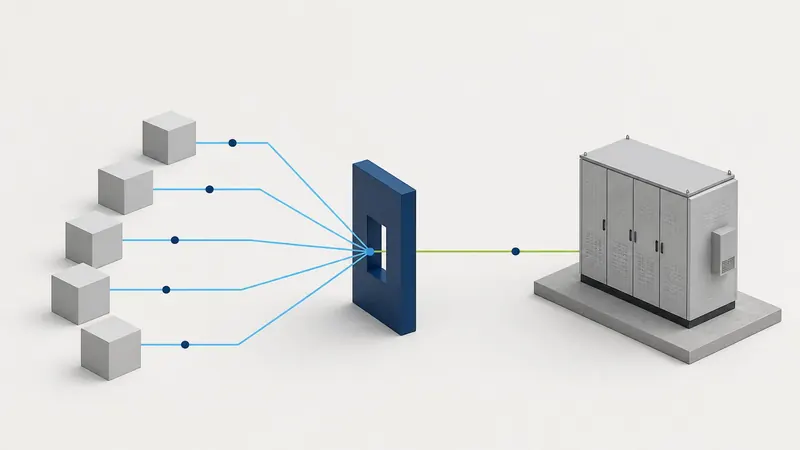
GRIDSTROM's platform architecture connects financial intelligence, enterprise data, asset operations, governed workflows, and lifecycle transactions around persistent records and explicit decision rights. The objective is not to replace every trusted source system. It is to preserve context across systems so an investment decision can remain connected to delivery, operation, optimization, service, and replacement.