
Exploring the AI Energy EcosystemData Centers & AI Infrastructure
From Grid Burden to Grid Asset
How Data Centers Can Strengthen the Communities That Host Them
By the GRIDSTROM Intelligence Team
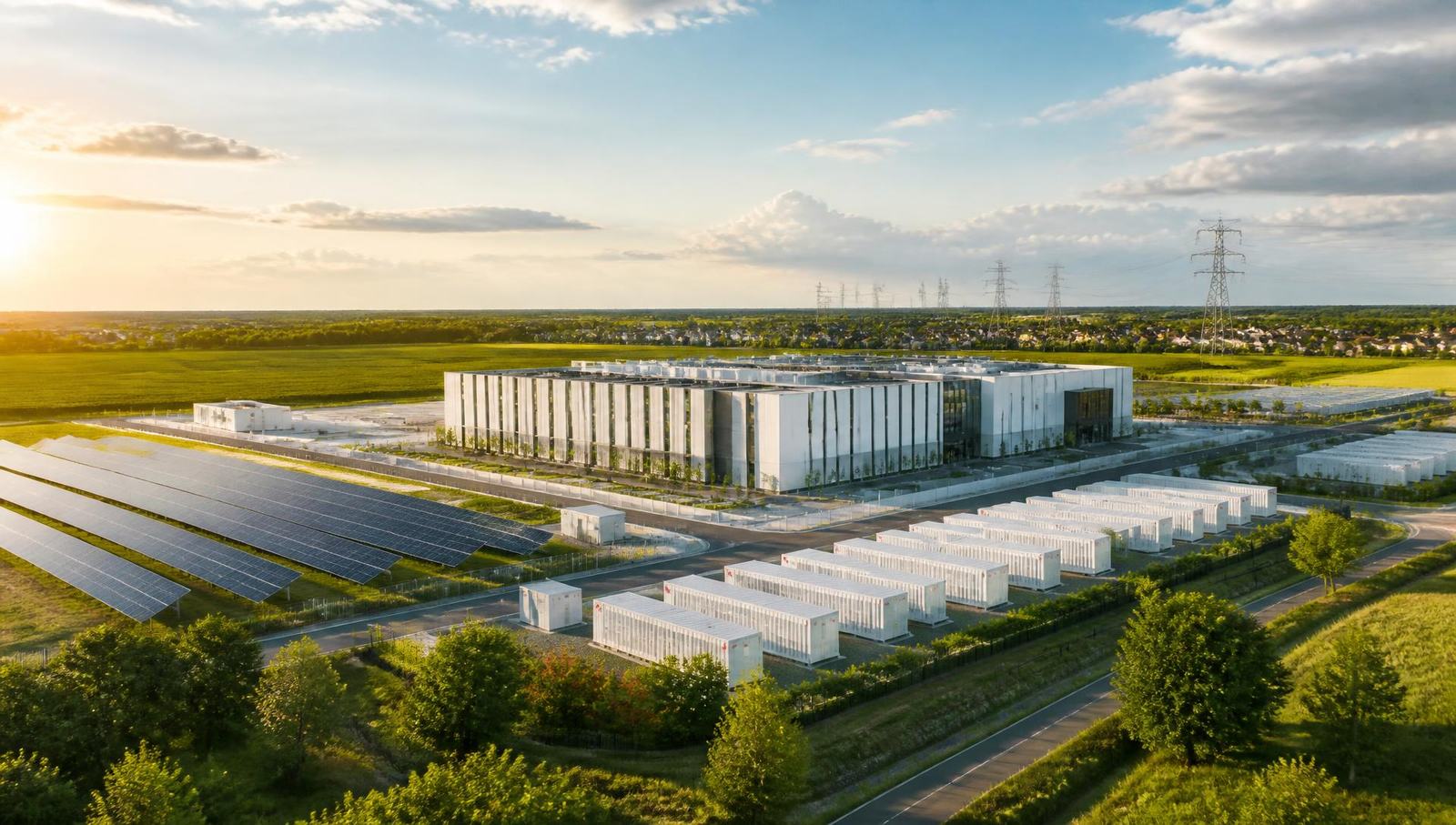
Illustrative visualization. A data center campus designed alongside dedicated generation, storage, and managed grid interconnection.
Executive Summary
Data centers power artificial intelligence, cloud computing, digital healthcare, autonomous systems, financial services, communications, and much of the modern economy. But they also require large, reliable supplies of electricity.
That creates a basic question for communities: will a new data center strengthen the local economy, or place additional pressure on an already constrained electrical grid? The answer depends largely on how the project is designed.
A data center developed through the traditional model may rely heavily on existing utility capacity. If the local grid cannot support the new demand, the project may require new substations, transmission lines, transformers, generation, and other upgrades. These improvements can take years, create public opposition, increase project costs, and raise concerns about who will ultimately pay for them.
A different model is possible. By combining dedicated generation, battery storage, microgrid controls, intelligent demand management, and a carefully structured utility connection, a data center can reduce its dependence on the existing grid. In certain markets and under approved utility arrangements, it may also support the grid, improve local resilience, and help fund benefits for surrounding communities.
The goal is not simply to build a data center that consumes less electricity. The greater opportunity is to transform the data center from a large, unmanaged load into an intelligent energy asset.
Why Data Centers Are Difficult to Deploy
Data centers are not ordinary commercial buildings. A major campus may require a continuous supply of electricity comparable to a large industrial facility or, in some cases, a small city. It must also operate with extremely high reliability because even a brief outage can interrupt businesses, cloud services, financial systems, healthcare applications, communications, and artificial intelligence workloads.
- Limited available utility capacity
- Long utility interconnection timelines
- Transmission and substation constraints
- Shortages of transformers and electrical equipment
- Community resistance and electricity-rate concerns
- Water, noise, land-use, and emissions concerns
- Permitting and regulatory complexity
- High construction and financing costs
- Uncertainty about when power will become available
- Strict uptime and backup-power requirements
- Rapid changes in computing demand and technology
In many markets, acquiring land is no longer the hardest part. The harder problem is securing enough reliable power at the right time and at a financially workable cost.
Why Communities Push Back
Community opposition is sometimes described as resistance to technology or economic development. That description is usually too simplistic. Residents and local officials may support investment while still asking reasonable questions:
- Will the data center use electricity needed by homes and local businesses?
- Will residential electricity rates rise?
- Who will pay for new substations, transmission lines, and generation?
- Will utility customers carry the risk if the project is delayed or canceled?
- Will the facility create enough jobs and local benefits to justify its scale?
- What happens during heat waves, winter storms, or grid emergencies?
- Will the project increase water use, noise, emissions, or pressure on local land?
- Will the community receive lasting value, or only temporary construction activity?
These concerns should not be dismissed. A responsible development plan should answer them with engineering analysis, cost-allocation protections, and measurable community commitments.

Does a Data Center Automatically Raise Electricity Bills?
No. But the concern is not imaginary.
The effect on other customers depends on how the project is financed, regulated, operated, and connected. A large new customer can increase utility revenue, support tax collections, justify infrastructure investment, and spread some fixed costs across a broader customer base.
Pressure can arise when major upgrades are required, costs are shared broadly rather than assigned to the project, special rates shift costs elsewhere, new generation is not added quickly enough, demand rises during expensive peak hours, or infrastructure becomes stranded after a project is canceled or downsized.
The better question is: what new energy infrastructure will the project bring, who will pay for it, how will demand be managed, and how will existing customers be protected?
The Traditional Model
Power generation → Utility grid → Data center
This approach can work where abundant grid capacity already exists. Where capacity is limited, it can create long delays, expensive upgrades, greater exposure to energy prices, community resistance, higher financing costs, and dependence on utility construction schedules.
Under this model, the data center is treated primarily as a large new customer and may be perceived as a grid burden.
The Grid-Asset Model
Dedicated generation + battery storage + microgrid controls + utility grid → data center, plus potential grid and community support.
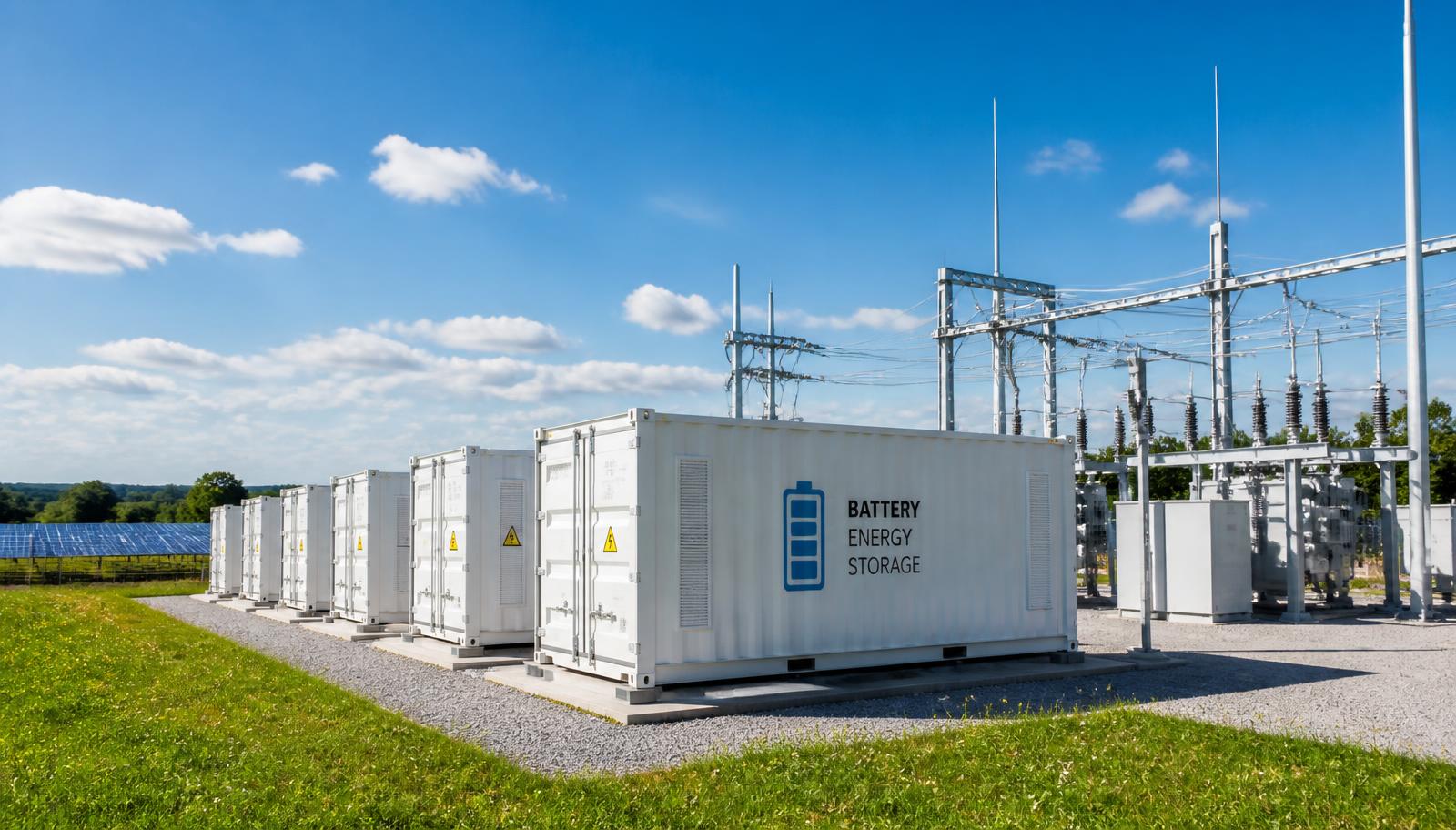
A grid-asset data center may combine dedicated generation, battery storage, microgrid controls, advanced energy-management software, flexible computing loads, demand response, utility coordination, resilient backup resources, approved exports or grid services, and community resilience programs.
This does not mean the facility disconnects from the grid. It means the facility uses the grid more intelligently. It may reduce demand during critical hours, store energy when supply is abundant, operate through outages, and, where permitted, provide capacity support, frequency response, demand reduction, or controlled power exports.
A Simple Analogy
Imagine a new factory that wants to use a large amount of water from a town reservoir. Under the traditional model, the factory connects directly and expects the community to expand pipes, pumps, and storage. Residents naturally worry that the factory will take water they need or force them to pay for upgrades.
Now imagine the factory builds its own wells, storage tanks, recycling, rain collection, and smart controls, and can support the town during emergencies. It still uses the community system, but it no longer depends on it in the same way. A data center microgrid can serve a similar role for electricity.
Three Possible Deployment Scenarios
Traditional grid-dependent
- Utility must build new capacity
- Multi-year interconnection
- Cost-allocation disputes
Hybrid utility + microgrid
- Phased utility supply
- Storage and dedicated generation
- Defined community benefits
Grid-interactive energy campus
- New generation from day one
- Managed imports and grid services
- Contractual protections
Worst Case: Traditional Grid-Dependent Development
A large AI campus requests far more electricity than the utility can currently provide. The utility must build transmission, expand a substation, order major transformers, and secure additional generation. The project faces multi-year delays, hearings, rising construction costs, financing expense, cost-allocation disputes, and possible relocation.
- Likely outcome: delayed or abandoned project
- Risks: cost overruns, stranded infrastructure, political opposition, missed demand, lost competitive advantage, cancellation
Most Likely Case: Hybrid Utility and Microgrid Development
The utility can provide part of the requirement, but not all of it immediately. The project is phased and combines utility power, dedicated generation, battery storage, microgrid controls, flexible computing schedules, backup resources, and a defined community-benefit program.
- Likely outcome: earlier phased operation
- Benefits: faster time to power, lower peaks, greater reliability, better utility planning, better community acceptance
- Limitations: upfront capital, complex engineering, utility approval, possible export restrictions
Best Case: Grid-Interactive Energy Campus
The campus is designed from the beginning with new generation, large-scale storage, intelligent controls, managed imports, resilience, approved grid services, and contractual community protections. It can reduce demand during grid stress and may support nearby critical facilities where permitted.
- Likely outcome: the campus becomes an economic-development, energy-infrastructure, and resilience asset
- Potential benefits: earlier operation, stronger uptime, lower peak demand, grid-service revenue, local infrastructure, higher long-term value
Traditional Model Versus Grid-Asset Model
| Issue | Traditional Model | Grid-Asset Model |
|---|---|---|
| Power source | Primarily utility grid | Utility plus generation, storage, and controls |
| Peak demand | Often unmanaged | Actively managed |
| Outage resilience | Backup primarily serves the facility | Integrated microgrid may offer broader resilience |
| Interconnection risk | High where capacity is constrained | Potentially reduced through phased and managed demand |
| Community perception | Large new consumer | Potential infrastructure partner |
| Grid services | Usually limited | Possible where approved |
| Community benefits | Often tax and jobs focused | May include direct energy and resilience programs |
| Capital cost | Lower initially | Higher upfront investment |
| Long-term value | Dependent on utility availability and rates | Multiple potential value streams |
Benefits by Stakeholder
Data Center Operators
- Faster access to power and earlier revenue generation
- Greater uptime and reduced outage exposure
- Lower peak-demand costs and more predictable energy expenses
- Better control over expansion
- Improved sustainability and community relationships
- Increased long-term facility value
Investors and Lenders
- Reduced delay and cancellation risk
- More predictable operating costs
- Stronger resilience and asset value
- Potential diversified revenue
- Better permitting prospects
- Greater confidence in future expansion
Utilities
- Better visibility into large-customer demand
- Reduced peak stress
- Flexible load management
- New generation and storage
- Demand response and ancillary services
- Better-timed upgrades and improved reliability
Governments
- Tax revenue and construction activity
- High-value infrastructure and technology investment
- Workforce development
- Improved emergency resilience
- Attraction of related industries
- Better protection for local residents
Surrounding Families and Businesses
- Potential bill credits or community solar
- Energy-efficiency and weatherization programs
- Community batteries and resilience hubs
- Backup support for critical facilities
- Workforce training and local hiring
- Ratepayer protections and infrastructure improvements
Technology Users
- More available AI and cloud capacity
- Faster medical and scientific research
- More reliable digital services
- Faster adoption of robotics and autonomous systems
- Greater productivity and economic competitiveness
Where the Financial Return Comes From
- 01Faster time to power and earlier operating revenue
- 02Avoided or deferred infrastructure costs
- 03Lower energy and demand costs
- 04Grid-service revenue where permitted
- 05Reduced downtime and customer disruption
- 06Increased asset value
- 07Improved permitting and community acceptance
- 08Strategic value from serving high-value computing demand
Illustrative structure only. Every input must be modeled against project-specific engineering, market conditions, financing, utility rules, and operating life.
Total project value may include energy savings, grid-service revenue, avoided infrastructure, avoided downtime, earlier operating revenue, incentives, increased asset value, and strategic and community value — less capital and operating costs.
For a very large hyperscale campus, value created by earlier operation, higher uptime, and expanded computing capacity could potentially reach hundreds of millions or even billions of dollars over time. That does not mean every microgrid produces a billion-dollar return. Return on investment must be based on project-specific engineering, market conditions, financing, utility rules, technology performance, and operating life.
Community-Benefit Options
- Community solar subscriptions
- Direct household bill credits
- Efficiency and weatherization programs
- Resilience hubs
- Batteries for hospitals, shelters, schools, and emergency facilities
- Support for low-income energy programs
- Workforce training and apprenticeships
- Local contractor participation
- Emergency-energy support
- Contractual ratepayer protections
- Community Benefits Agreements
- Public reporting on energy use and performance
Risks and Limitations
- High upfront capital cost
- Complex engineering and interconnection approval
- Restrictions on exports
- Fuel-price and emissions exposure
- Battery degradation and equipment failure
- Cybersecurity and software integration
- Maintenance requirements
- Uncertain market revenue
- Permitting and incentive changes
- Technology obsolescence
- Competing priorities between grid support and backup reserves
A battery cannot simultaneously provide its full capacity to the grid and preserve that same capacity for emergency backup. The system must be designed around clear priorities, operating rules, and contractual obligations.
The GRIDSTROM Grid-Partner Infrastructure Framework
Bring New Energy
Evaluate dedicated generation, storage, and other resources rather than relying only on existing community capacity.
Limit and Manage Grid Demand
Define and control maximum grid imports, especially during periods of system stress.
Provide Approved Grid Services
Evaluate demand response, stored-energy support, flexible load, and other utility-approved services.
Deliver Measurable Community Benefits
Make benefits specific, funded, transparent, and measurable.
Questions Every Project Should Answer
- 01How much power will the facility require?
- 02How much capacity is currently available?
- 03What new generation and storage will be added?
- 04What is the maximum planned grid import?
- 05Who pays for transmission, substations, and other upgrades?
- 06What happens if the project is delayed, reduced, or canceled?
- 07Can the facility reduce demand during grid emergencies?
- 08What resilience capability will the microgrid provide?
- 09Can any resources legally provide grid services?
- 10How will existing customers be protected?
- 11What benefits will the community receive?
- 12How will performance be measured and reported?
Conclusion
The debate over data centers is often framed too narrowly. One side focuses on economic growth and technological progress. The other focuses on electricity demand, infrastructure costs, and community risk. Both sides are asking legitimate questions.
The central question should no longer be only, “How much power will this data center consume?”
What new energy infrastructure will the project bring, how will it protect existing customers, and how will the community share in the value it creates?
With the right generation, storage, microgrid controls, utility agreements, and community commitments, a data center can become a resilient, intelligent, and productive grid asset.
About GRIDSTROM Energy Solutions
GRIDSTROM Energy Solutions supports organizations evaluating intelligent energy infrastructure, including microgrids, battery storage, distributed generation, EV charging, resilience planning, data center energy strategies, and strategic project partnerships.
Subscribe to The Intelligent Infrastructure Review
Three tracks, one publication. Choose what you want to receive — Executive & Capital Brief, Engineering & Deployment Review, or the AI Energy Ecosystem Report.